Post Format ArchivesVideo

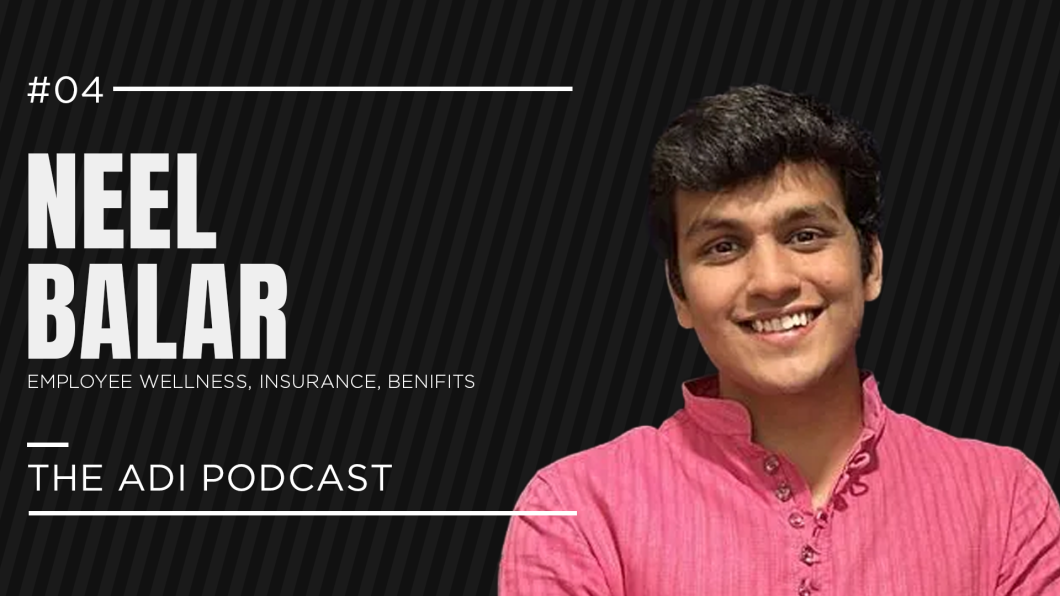
#05 – Neel Balar: Co-Founder @ Clueso on AI video generation, product docs & customer success

Neel is the Co-Founder at Clueso. Founded in 2023, Clueso is revolutionizing product education by enabling companies to create high-quality instructional videos and documentation in minutes. Their AI-powered platform transforms simple screen recordings into professional-grade content, streamlining customer onboarding and employee training.

In this episode, we delve into the evolution of customer education in the AI era.

  • The inception of Clueso and its mission to simplify content creation.
  • How AI is reshaping the landscape of product tutorials and documentation.
  • Strategies for startups to effectively educate their user base.
  • The challenges and triumphs of building a tech company from the ground up.

Neel also shares his entrepreneurial journey – from leading a Hyperloop team in college to co-founding Clueso and participating in Y Combinator’s W23 batch. We discuss the impact of AI on content creation, the importance of customer feedback, and insights into scaling a startup in today’s competitive landscape.


Listen On


Episode Timestamps

  • 00:00 Intro
  • 01:01 How did Clueso start?
  • 4:58 Customer Education
  • 7:40 Use cases
  • 10:04 Ideal Customers
  • 11:02 Customer Journeys
  • 15:09 Clueso as an AI Company
  • 16:05 10 Year Vision of Clueso
  • 17:19 Co-Founders of Clueso
  • 19:42 Things Neal learnt
  • 22:43 Journey before Clueso
  • 27:02 Reaction of Friends and Family
  • 28:52 How to encourage student to Startup?
  • 32:52 Startup Mindset for students
  • 35:00 Advice for founders in using AI
  • 37:37 Identifying Problems for AI for Startups
  • 43:49 YC Interview Experience
  • 47:58 Is YC worth it for Indian Founders?
  • 49:33 Advice for YC
  • 52:16 Tech that powers Clueso
  • 56:58 How does Clueso think about product education?
  • 1:03:26 How to create moat for your company?
  • 1:05:22 First 10 Customers at Clueso
  • 1:11:25 How to grow as a founder on LinkedIn?
  • 1:16:37 What’s next for Clueso?
  • 1:18:52 Closing note

About Neel Balar

Neel Balar is the Co-Founder of Clueso, an AI-powered platform for product education and documentation. Previously he led a Hyperloop team in college before going on to build Clueso through Y Combinator W23.

LinkedIn  ·  Twitter/X  ·  Clueso


Full Transcript

Neel Balar:

When you are starting up, there are so many new things you come across, and you often feel impostor syndrome. With AI now, there are countless use cases to consider. Almost every company that serves customers can use AI to improve the customer experience, whether by automating more of the work or going beyond what they do today. One way to find an AI idea that can disrupt a market is to look at tools that already work well without AI – Salesforce and other old-school tools many companies use – and reimagine them as AI-first. If you were starting from scratch with AI, what would the ideal experience be?

Aditya Anand:

Thanks so much for doing this. I’m excited to learn more about you and your journey.

Neel Balar:

Thank you so much for having me. It looks fun and exciting.

Aditya Anand:

To begin, I’d love to learn more about how you got started with Clueso. How did you get the idea? Tell us the origin story.

Neel Balar:

We didn’t start with Clueso. We were doing something else before. My cofounders and I met at IIT Madras. At the end of our third year, in 2021, we began working together on a product called DeskLamp, a note-taking and digital reading tool for students and researchers. It was COVID, everyone was reading online, and we wanted to improve the reading experience. We were very focused on building product, not on acquiring customers and revenue. Later we shifted to acquiring users from universities in India and abroad, mostly through organic word of mouth. We ended up with around 25,000 users in about a year. The big problem was monetization. Students and researchers didn’t want to pay for software, at least for what we built. As a business, it didn’t make sense.

That’s the idea we got into Y Combinator with as well – YC W23. We interviewed in November 2022. In the interview, YC partners said they loved what we built, but the market wasn’t great and would be hard to get big in. At that point, we felt we would do things differently and succeed anyway. Two months later, by January when the batch started, we also realized the market didn’t work. We explored the US market too, then decided to pivot. For four to six weeks we explored multiple ideas, talking to many companies in our batch and in SF. That’s when we landed on Clueso.

The reason was one of our biggest problems with the previous startup: customer education. When we spoke to users – both active users and those who churned, even within the same cohort from the same school and year – the main difference was that churned users couldn’t figure out how to use the product or didn’t know about key features. Educating customers on how the product works and what it can do is critical. We decided to solve product education to help more customers use more features, get more value, and reach their “aha” moment faster.

Since then we’ve made a few small pivots, but have stayed focused on product education. At Clueso, we’re building an AI-powered platform to help companies create videos and documentation. Today, SaaS companies educate customers primarily through a help center/knowledge base and videos, but creating this content is very manual. We’re automating it with AI.

Aditya Anand:

You were talking about help documentation for product education. In the startups I’ve been part of or cofounded, I’m very familiar with this problem. Product education is always a challenge, and teams face competing priorities: build product or build help docs and make the product more self-serve. What should an early-stage B2B SaaS do to educate customers?

Neel Balar:

Great point. There are always competing priorities, and customer education rarely becomes top priority unless you see major churn because of it. But it’s critical for delivering a great customer experience, driving word of mouth, and improving retention. Teams often don’t prioritize it because the process is manual, involves multiple people, and the ROI isn’t straightforward.

To create a good demo or how-to video now, a designer handles templates and editing, while the PM knows the feature and content. There’s back-and-forth and scheduling across teams. It’s hard to get alignment and time. We’re solving this by making it quick and low-effort. Our product works like this: you do a raw screen recording of your product while explaining a feature. From that, Clueso automatically creates a professional video and step-by-step documentation. It’s the same as explaining a feature to a teammate or customer on a call, but you just do a quick screen recording and get professional output. Because it’s simple and fast, our customers create many more videos and articles and see strong impact. Prioritizing this early helps deliver a great customer experience.

Aditya Anand:

Product education is one use case. Are there others for which customers use Clueso?

Neel Balar:

Absolutely. Product marketing is a big one. Tech companies ship new features frequently. You need to educate existing customers to drive adoption and upsell, and also attract new prospects. That requires product videos, blogs, GIFs, newsletters, etc. Clueso helps create those quickly. We see early-stage and larger companies use it for new feature videos and monthly update videos.

Another large use case is internal team training, typically when you have 200+ employees. You need to onboard new team members on your product, internal tools, and processes – creating SOPs and documentation. L&D teams handle this and use Clueso.

Sales enablement is another. How do you make sales more efficient? Train reps on your customized CRM workflows – Salesforce’s generic docs won’t reflect your customizations – and create use-case-specific videos for different industries so prospects see what’s most relevant.

Aditya Anand:

Tell us about Clueso’s ideal customer profile. Who will say, “This is something I need”?

Neel Balar:

We’re continually narrowing it, but today it’s primarily Series A+ B2B SaaS companies, especially in the US, where many fast-growing SaaS companies are. We’re also seeing strong pull from operational companies and fintech/insurance, where internal training is significant. Because we’re a SaaS company ourselves and understand the space, we’re starting with B2B SaaS, typically Series A+.

Aditya Anand:

I want to share for the audience that my company, Admin – an HR and IT automation platform – was one of Clueso’s early customers. As a seed-stage startup a year and a half into building, we had no bandwidth for help docs or videos, and our product was complex for customers and internal non-technical team members. We found Clueso on Product Hunt or LinkedIn, tried it, and over the past few months created videos and step-by-step documentation refined by Clueso. We published it and saw real ROI in customer and internal understanding. Can you share more early customer stories?

Neel Balar:

Great to hear your story. We love working with you and your team. One example: Aspire, a Singapore-based fintech and one of the fastest-growing fintech companies. We onboarded them about three months into our journey. They started by creating videos and documentation for their customer-facing help center, then expanded into many internal use cases: educating internal teams on financial terms, supporting the support team with “how to answer this” guides, and other operational training. In a recent case study, we found they saved close to 80% of the time creating content, doubled output, and freed time to focus on other parts of their job.

Another (unnamed) company launched version two of their product and needed 100+ videos and 100+ articles within a month – impossible manually. With Clueso they created over 100 videos and help articles for the launch, and customers immediately got value because documentation was strong. We’ve since onboarded larger companies, including US public companies with product academies and certification courses. They need high-quality videos and articles covering concepts and how things work. Teams use Clueso to produce the same content 10x faster.

Aditya Anand:

Do you see yourselves as an AI company, a product education or product marketing company, or something else?

Neel Balar:

We’re definitely an AI company. Our ability to do what we do comes from advances in the models we use. In our product we use speech-to-text for transcription, GPT-4 APIs for AI rewriting, and text-to-speech to generate voices. We’re AI-powered, focused on product education.

Aditya Anand:

You’ve had a strong start. How do you see this evolving, and what’s the ten-year vision for Clueso?

Neel Balar:

The last few months have been great. So far we’ve focused on training videos to educate customers on using a product, but we see this expanding into many domains. We want to support any instructional or educational videos, not just screen-recorded SaaS product videos. Ten years out, we envision catering to any kind of educational video creation. We started with video and documentation creation for SaaS companies, making it super easy, and we may eventually challenge large, general-purpose video creation tools. We’re early, figuring it out, but we see a path to a large product that helps create educational content across many use cases.

Aditya Anand:

Tell us more about your cofounders. How did you meet and start working together?

Neel Balar:

I love my cofounders. We were in the same batch at IIT Madras. My cofounders are Akash and Prajwal. Akash and I were roommates in our first year, and he and Prajwal were great friends too. We knew each other for a while but started working together later because we were doing different things in college. Akash started a product design club. Prajwal excelled at competitive programming, winning hackathons. I was doing deep tech and hard tech with Avishkar Hyperloop, an international competition team building a Hyperloop prototype. We participated in SpaceX’s Hyperloop Pod Competition, met Elon Musk in 2019, and won a couple of international competitions. After all that, we realized we wanted to build something of our own, bring complementary skills – business (me), design/product (Akash), and engineering (Prajwal) – and start together. We all live together now in the same apartment.

Aditya Anand:

So all three of you had the entrepreneurial bug from the beginning?

Neel Balar:

Yes, since the third year of college.

Aditya Anand:

Starting a startup takes you deep into several domains – product education, product marketing, video-to-text, the AI revolution, and more. What are some things you know now that you didn’t when you started?

Neel Balar:

We initially worked on in-app product walkthroughs, not videos and documentation. After two months we realized we lacked a unique insight to win in that space; established digital adoption platforms already did well. We noticed companies wanted to create more videos, and over 80% of SaaS users prefer learning via video. With TikTok and reels, people prefer visually heavy content. We pivoted to video. We started without AI – basic screen recording, zoom effects, etc. – but learned that audio is a big challenge: writing scripts, mic quality, and many people are insecure about their voice. AI voiceovers got much better since we started in June 2023, so we added AI voiceovers. Then customers didn’t want to write professional scripts, so we used GPT-4 to generate or improve scripts by analyzing on-screen actions or the original audio. Most features came from customer pull. We didn’t begin with a long list of AI features; we built a faster, better way to create videos and docs, then added AI where it solved real challenges.

Aditya Anand:

I’d love to learn more about your journey before Clueso. What was your childhood like? Any formative experiences that shaped your worldview?

Neel Balar:

I grew up in Guntakal, a small town in Andhra Pradesh. My family runs a textiles business; no one was in tech. Up to tenth grade, life was simple: school, come back, play cricket. In sixth grade I started going to my dad’s office – the dukaan (store). Watching customers pay upfront for what they bought was exciting. For two or three years I got very interested and thought, “I want to build something of my own.” As a Marwari, you often have a business mindset and want to do your own thing.

I also realized my dad had already grown the business well, and there wasn’t much for me to build there. I was good at math and physics, so I prepared for JEE, got into IIT Madras, and explored many clubs and teams. I joined Avishkar Hyperloop, learned a lot, and later led a 70-person team. When my tenure ended, I felt something missing – I liked having many things on my plate. I decided to either work at a very early-stage startup for flexibility or start something myself. My cofounders were already inclined toward starting up, and we realized we had complementary skills and the same goal. That’s how we started together. I would have loved to do more in childhood, but it has shaped up well.

Aditya Anand:

How did your friends and family react when you told them you were starting this company?

Neel Balar:

I’m fortunate to have a very supportive family. Some friends can’t pursue startups due to financial situations; I didn’t have that pressure. My dad was very supportive – he even said he’d invest. My parents know what it’s like to build a business and encouraged me. My friends were excited too. At 22, with few responsibilities, it felt like the best time to start.

Aditya Anand:

We were talking off-camera that early in life – right after college – is the best time to start a startup because responsibilities are low. How do we encourage more students or early-career professionals to take this path, given family background and financial expectations? What can colleges, students, or families do to encourage more entrepreneurship?

Neel Balar:

This is a topic we love discussing. A few things help. First, residency or entrepreneur-in-residence programs run by VC firms that provide seed funding. That initial financial stability for a few months gives flexibility and makes the leap safer.

Second, in college, seeing seniors start up and do well creates strong pull. At IIT Madras, after we got into YC, many juniors reached out each application cycle for feedback. That exposure matters. Third, pre-incubation programs like IIT Madras’s Nirman provide small grants (e.g., INR 2 lakhs) with no equity so you can explore. Fourth, more academic flexibility. Strict attendance requirements can be a barrier. BITS, for example, has flexible attendance, which may be one reason more students try startups. These factors together encourage more people to start up.

Aditya Anand:

In terms of starting up, mindset is more important than intelligence. For students in their third or fourth year, how can they build courage and the right mindset? Should they start experimenting with something?

Neel Balar:

Starting up brings constant impostor syndrome. The best antidote is finding great cofounders. Don’t begin with the sole intention “we must start a company.” Start working with people you enjoy. Go to hackathons together, build small products. With AI credits available – OpenAI, AWS (often $5,000), etc. – build a small prototype. When you build something and get someone to use it, you see the impact and get motivated to build bigger things. Start small with the right people; that builds the right mindset for the long term.

Aditya Anand:

Clueso is in the middle of the AI boom. How would you advise founders building in AI to navigate hype versus reality?

Neel Balar:

I don’t think it’s hype anymore. We see real use cases across fields, and it’s just the start. Models will keep improving, and many workflows still done the old way can be transformed.

For existing companies, there are two tracks: improve internal efficiency (Copilot and other tools) and deliver better customer-facing experiences by automating more and doing more than today. For new builders, you don’t need to build models. Use APIs and credits. Pick a small, real problem and build a prototype, even if it’s a wrapper over GPT. That’s good enough to explore, learn how models behave, and discover real use cases. As you build, you’ll learn from users and arrive at something more concrete.

Aditya Anand:

Let’s talk about identifying problems. As a young entrepreneur experimenting with ideas, how do you find a space that can be disrupted by AI?

Neel Balar:

YC advice I like: look at tools already doing great without AI – Salesforce and many others – and reimagine them as AI-first. If you designed the experience from scratch today, what minimal user input would produce the final output they need? That’s how we thought about video creation.

Also look for industries with very manual processes – insurance claims, healthcare documentation, etc. You may not fully replace processes immediately, but you can make them 10x faster. For students and early professionals, it’s harder to find ideas because you lack domain exposure, so you often build for your own problems. That’s what we did with DeskLamp – improving digital reading – but those can be “nice to have” and hard to monetize. Validate early: talk to enough people in the space, test your hypotheses, and as YC says, sell before you build. Know who you’ll serve and whether the problem is big enough to pay for before you invest heavily. We learned that the hard way with DeskLamp.

On YC itself: many founders ask whether YC is worth it given the standard deal. At the early stage, it absolutely is. Filling out the application alone forces clarity about your market and product that you might not get from day-to-day execution. For us – with zero prior work experience – YC was a game changer. We were product-heavy and customer-light, conducted user interviews poorly, and misunderstood the importance of revenue focus. YC corrected a lot of that. The brand also adds trust; many customers are more willing to buy from a YC company. The network is incredible – the smartest group of 200 people I’ve met in one place. If I were starting again, I’d do YC again, maybe even at a slightly later stage. For Indian companies targeting the US market, YC also builds trust.

Aditya Anand:

Tell us about your YC interview experience.

Neel Balar:

We applied with DeskLamp. In the application we had about 10,000 signups; by the interview two to three months later, 15,000–18,000. The interview is only ten minutes; they decide quickly. They ask basic questions about your business: customer, market, how it grows. In our interview, they said our product was good and users liked it, but the market was a graveyard – hard to make money and build a big business. We explained how we’d win, and they asked if we had other ideas. They just want to see flexibility, because early on you can’t be too attached to an idea. We pivoted later than we should have.

You can’t tell how your interview went; reactions are neutral. We thought we wouldn’t make it, but the next morning they called and accepted us. They didn’t love the market but loved the team and were willing to fund us to figure it out. YC focuses heavily on team – hustlers who won’t give up. They also like young founders; students who choose building over partying show motivation. I recommend anyone early in their journey apply to YC, even without quitting your job. The application alone is valuable, and if it works out, it can be life-changing.

Aditya Anand:

There’s a narrative about whether YC is worth it for Indian founders. Specifically, what should an Indian founder expect to get out of YC?

Neel Balar:

YC is equally worth it for Indian founders. The only challenge is if you’re serving the Indian market exclusively – B2C or fintech – because YC requires you to incorporate in the US, Singapore, or Canada, which may complicate Indian operations. But if you’re building SaaS or software targeting the US, it’s a no-brainer. It’s the best accelerator for that path.

Aditya Anand:

For someone filling out the next batch’s application, what mindset should they have and how should they approach it?

Neel Balar:

YC wants to see how well you know your customers. Are you talking to them? Do you have real insights versus generic statements? Traction helps, but they care about your thinking and insights, and about the team. It’s hard to get in as a solo founder; I recommend finding a cofounder, working together for a few months, then applying. Startups are hard with many more downs than ups; you need someone to share the journey with.

For the application: keep answers concise and simple. Avoid complex jargon. Explain your product as if they know nothing about your space. Communicate how you’ll deliver value and why your team can do it. Share what you’ve built before to show hustle and motivation.

Aditya Anand:

Tell us a bit about the tech that powers Clueso.

Neel Balar:

At our core, we do a lot of video processing in-house, using libraries like FFmpeg and other video processing/editing libraries. On top, we have AI features: speech-to-text via APIs like Deepgram, Whisper, and AssemblyAI; script rewriting via GPT-4; and text-to-speech via ElevenLabs, WellSaid Labs, and Murf.ai. We also use GPT-4 Vision to analyze visuals. For example, we launched a feature where you upload a presentation and Clueso generates a concise, narrated video – great for sales demos where decks can be boring, but a crisp voiceover improves engagement. We prompt-chain internally to orchestrate results and combine AI with our video processing and UX to deliver a smooth end-to-end workflow.

Aditya Anand:

Okay. Models will evolve.

Neel Balar:

We haven’t heavily experimented with non-OpenAI LLMs for script work; OpenAI works well for our needs and cost optimization isn’t a top priority right now. For voiceover we use market leaders like ElevenLabs and WellSaid Labs, and for transcription we use specialized providers. We may fine-tune a smaller model later for our specific use case. For now, GPT-4 meets our requirements. On foundational models generally, I don’t have unique insights beyond what’s public. One area we do know well is customer success – how to offer a great customer experience as a SaaS product. I’m happy to talk about that.

Aditya Anand:

Given Clueso’s focus on product education and customer success, how do you think about these for your own customers?

Neel Balar:

We experiment a lot. We’ve built a detailed help center/knowledge base covering all Clueso features, with both a video and an article for each feature because users have format preferences. It’s all created with Clueso. We experiment with video length, GIF density in articles, and more to see what works, then share those learnings with customers.

In-app, we avoid interruptive tours. One thing customers love: while a video is rendering, instead of a blank loading screen we show short GIF tips like “Add zoom effects to improve engagement,” with a quick how-to. Since users render 4–5 times per session, they spend a few minutes on that screen and pick up tips passively. We also added hover tooltips that explain what buttons do and embedded GIFs/videos next to features so users can learn without leaving the app.

For customer success, we’re heavy Slack users. For each customer we create a shared Slack channel – or Microsoft Teams, WhatsApp, or Discord if they prefer. It’s easier than email; customers drop quick messages for issues or feedback. That lets us support them faster and learn how to improve. We now have 200+ channels across platforms, so we built an internal announcement tool: write an update once and post to all channels. Customers loved it and asked when we’d launch it in Clueso. We’re productizing it.

On product marketing, we post feature videos on LinkedIn, which drive demos. We dogfood everything we claim to deliver, which yields insights and credibility. Using our own product shows customers the impact directly because they experience our content themselves.

Aditya Anand:

How do you think about building a moat and differentiation?

Neel Balar:

There are many video tools, most very general. You can create anything, but it takes time to learn and do. We’ve focused specifically on screen-recorded product videos. We understand the exact problems: adding zoom effects, high-quality voiceover, consistent branding with intro/outro, and more. We’ve made these one-click and automated. By focusing deeply on this niche, we can deliver a better experience than general tools.

Second, while others require stitching together 3–4 tools, we’ve built the best end-to-end workflow for screen-recorded demos and how-tos. The way we compose AI, editing, and workflow is a differentiator.

Aditya Anand:

How did you get your first ten customers?

Neel Balar:

The first ten are the hardest and most educational. Several channels each contributed one or two:

• Network and warm intros: former colleagues, angel/investor intros, anyone who trusts you already.
• Communities: customer education, customer success, and product marketing communities. Be genuinely helpful; don’t sell. If you add value, people will approach you.
• Alumni and investor networks: portfolio companies trust each other more; alumni (IIT, BITS, etc.) often occupy founder or product roles and are willing to help.
• Personalized outbound: I searched LinkedIn for companies hiring customer success roles with responsibilities like “create videos and documentation.” That signaled a real need. I reviewed their websites and help centers, sometimes signed up to test onboarding, then sent very personal messages with specific, constructive feedback and explained how we could help. Those got replies and meetings.
• YC network: two of our first ten customers were YC-backed; one from our batch took a bet before we had much product.

Aditya Anand:

Talk about doing things that don’t scale.

Neel Balar:

YC teaches this well. Don’t optimize for 1,000 lukewarm users when you’re chasing your first ten. Do anything to find ten who love you – people who’d be genuinely upset if your product disappeared. Work from a design partner’s office, shadow their workflows, customize for them. Learn deeply first; scaling comes later.

Aditya Anand:

I see Clueso making a lot of buzz on LinkedIn. For a founder trying to grow on LinkedIn – outreach and posting – what do you recommend?

Neel Balar:

LinkedIn works well for us – all three cofounders post, and engagement is high. There’s clear ROI: we get demos directly from posts. The hardest part is starting. Don’t worry about perfect content at first; just start posting. Over time, resistance drops and quality improves.

Topics that work for us:
• Personal stories: why we started Clueso, what we learned from DeskLamp and why we pivoted, how we got our first ten customers.
• Product updates: new features, how they help, and actual results (e.g., a launch post that led to ten demos).
• Thought leadership: how to launch features, create effective product videos, structure announcements, etc., with concrete examples and data.

People want to learn from authentic stories and practical insights. Engage in comments, be helpful, and be consistent. Twitter/X is something we’re still figuring out, but LinkedIn has been great.

Aditya Anand:

So to grow on LinkedIn, you need authenticity?

Neel Balar:

Authenticity, consistency, and quality. Don’t sacrifice quality for consistency. I post about once a week; the algorithm might prefer more, but I prioritize value in each post. If you’re consistent and high-quality, people will keep following.

Aditya Anand:

What’s next for Clueso – for the audience and for me as a happy customer? What can we look forward to?

Neel Balar:

Three focus areas:

• Output quality: make video outputs and documentation even better.
• Time to value: reduce time from raw input to final output; improve latencies across the pipeline.
• Expanded use cases: beyond screen-recorded demos and how-tos to marketing videos with animations and storytelling. Many still go to agencies and spend $5,000 per video; we’re exploring how to solve that.

Additionally, localization: we recently launched language translation – take a video in English (or another language) and translate it to 20+ languages for better regional experiences. We’re improving translation quality and adding more languages.

Aditya Anand:

Thanks so much for doing this. It was really insightful to get a behind-the-scenes look.

Neel Balar:

Thank you for having me. It’s a pleasure talking with you. We love sharing our journey and learning from others’ journeys too. We’ve been enjoying your podcast and look forward to hearing more from other guests.
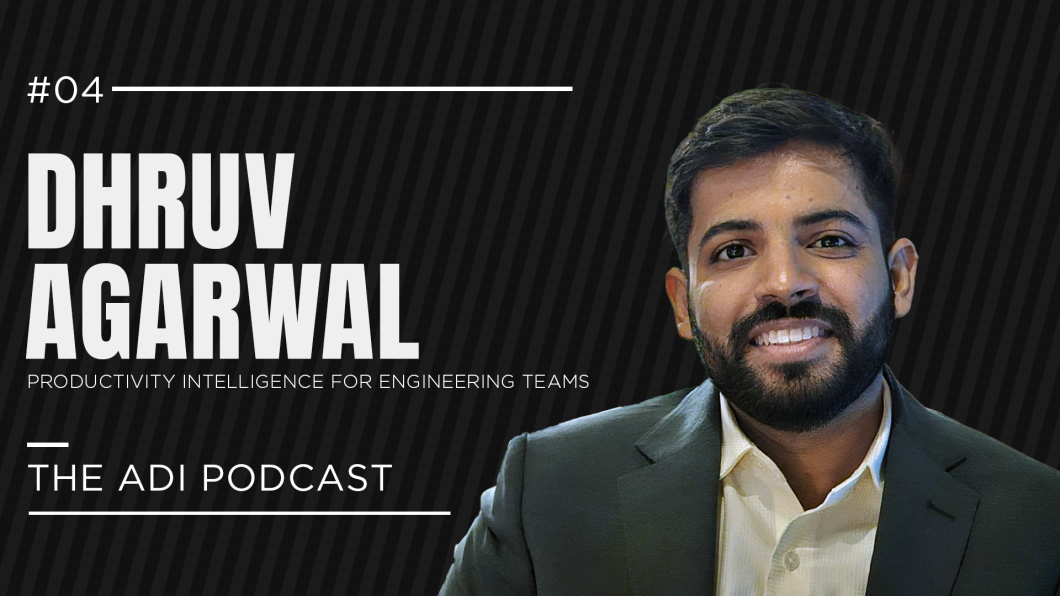
#04 – Dhruv Agarwal: Co-Founder @ Middleware on developer productivity, DORA & engineering excellence

Dhruv is the Co-Founder & CEO @ Middleware. Founded in 2022, Middleware is building the productivity OS for engineering leaders to eliminate the obstacles that hinder tech teams, maximize developer potential and foster a more fulfilling work environment.

In this episode, we delve into the evolution of customer education in the AI era.

  • How Dhruv turned a VP of Eng interview into middleware’s first paying customer in 15 days.
  • The mission: an OS for engineering teams so builders build and leaders lead.
  • Why bottlenecks form: rapid headcount growth without process maturity.
  • Defining developer productivity: commitments met and friction removed, not lines of code.

Dhruv started coding at 5, studied CS at Delhi College of Engineering (DTU), and interned at HackerEarth, Mozilla, and OWASP. He scaled systems at Kayako and Shuttle, then led at Maersk in Copenhagen. After 50+ leader interviews, he founded middleware in 2022 with co-founder Jayant (ex-Uber). Angel round and first hires closed in Oct 2022; first revenue hit on Dec 26, 2022.


Listen On


Episode Timestamps

  • 00:00:00 Intro
  • 00:00:46 On Middleware
  • 00:02:06 Engineering Culture
  • 00:03:57 Customers
  • 00:05:04 Dhruv
  • 00:08:05 The Joy of Building
  • 00:11:58 Before Middleware
  • 00:18:44 Friends and Family
  • 00:20:55 Beginning of Middleware
  • 00:23:55 Managing Seniors
  • 00:27:04 Developer Productivity
  • 00:29:43 DORA Metrics
  • 00:33:30 Middleware Product
  • 00:38:57 Internal buy-in
  • 00:42:58 Should metrics play a role in appraisal?
  • 00:44:56 Thoughts on AGILE
  • 00:47:34 10 Year Vision
  • 00:48:08 Insights
  • 00:51:25 Developer Tools
  • 00:52:54 FOSS Middleware
  • 00:55:58 FOSS vs B2B SaaS
  • 00:57:35 Addressable Market
  • 00:59:27 Tech behind Middleware
  • 01:01:05 Customer stories
  • 01:02:34 Work-Life Balance
  • 01:03:36 Impact of Gen-AI
  • 01:05:04 Use cases of AI
  • 01:06:45 AI tools
  • 01:07:47 Advice for students
  • 01:10:58 Mindset
  • 01:19:13 Detecting culture fit
  • 01:21:54 What’s next for Middleware

About Dhruv

Dhruv is the Co-founder of middleware, founded in 2022. middleware is building an OS for engineering teams, unifying Jira, GitHub, calendars, and CI/CD to remove delivery bottlenecks.

LinkedIn  ·  Middleware


Full Transcript

Dhruv:

Someone called me for a VP of Engineering interview, and I thought it might be a good opportunity. I went for the interview and told them I wasn’t there for a job. I showed them the wireframes of what I’m building and asked if it could be useful. They said, if you build this in fifteen days, we’ll take a look.

Aditya Anand:

Thanks so much for doing this. I’m excited to learn more about you, Middleware, and your journey so far.

Dhruv:

Thank you, Adi, for having me. It’s a privilege and an honor to speak with you.

Aditya Anand:

Tell us about Middleware. What is the mission of the company?

Dhruv:

At Middleware, our mission is to become the OS for engineering teams. We want builders to build, and leaders to spend more time on strategic and technical work, instead of the constant firefighting we see today that leads to delays and dissatisfaction.

To answer why, I’ll go a step back. As engineering students, we dreamt of building something that would change the world. Many of us join large companies to do impactful work, but soon get stuck in bureaucracy and process, spending more time talking and reporting than building. We started Middleware to fix that. As a product company, we help teams reduce time to market by removing process bottlenecks, leveraging their existing tools like GitHub, Jira, and Calendar.

Aditya Anand:

In my experience as an engineer and engineering manager, builders constantly say, let us build. Can you describe the current engineering culture across startups? Where does Middleware come in?

Dhruv:

In a decently sized company, there’s a hierarchy: CTO, director of engineering, managers, then engineers. Ideas percolate down from product and leadership. Once ideas are ready, we plan a sprint. The steps are finite: plan, program, review, deploy, release, and monitor-rinse and repeat. Apart from coding, every step is collaborative, which means aligning people and timing, and that’s where bottlenecks form.

Many teams grew rapidly during the last decade of abundant funding. Growth wasn’t always organic, so there wasn’t time to set up the right processes. That turmoil creates bottlenecks, delays, and missed goals.

Aditya Anand:

What kind of customers are a good fit for Middleware?

Dhruv:

We’re fortunate to be industry- and size-agnostic. We’re best suited when a company has a middle layer-CTO or director, engineering managers, then engineers-because that’s where visibility problems start. Smaller startups are short on people, money, or time-often all three. As you grow to around 50 people, you have capacity, but not a smooth delivery process. That’s where Middleware helps. We become your co-pilots when you’re the agent of change, transforming the team into a smooth delivery machine.

Aditya Anand:

I’d love to learn more about you. Tell us about your beginnings and your childhood. Any formative experiences that shaped who you are today?

Dhruv:

Of course. Before I dive into my journey, I heard Zakir Khan say that everyone’s life is like Slumdog Millionaire-you don’t know what shaped you until you’re on the hot seat answering questions. I feel fortunate about my journey.

I was brought up in a middle-class family. We didn’t have many limitations on what to wear or eat, and I grew up in an educated household, but we didn’t have surplus. My mom is a computer teacher, so I got access to a computer very early and started programming when I was five. Through school I was the nerdy kid who couldn’t play any sport, but I was very good with computers. I still cherish the all-nighters before school.

Early access to the internet and programming made me fall in love with building. I dabbled in programming, animation, security, and more. Back in the Yahoo Messenger days, chat rooms gave me exposure to what people around the world were doing. I participated in online hackathons in class eight or nine with people worldwide.

I once told my father I wanted to get into Harvard, just because a geography chapter said it had an 8,800-acre campus and was the best university. He said, we can’t afford it-don’t think about it. I went back to prepping for IIT. I attended Delhi College of Engineering (now Delhi Technological University) and studied computer science. The rest of the journey you can cover with your questions.

Aditya Anand:

You mentioned you’re happiest when you’re building. Can you share examples of things you’ve built that brought you joy?

Dhruv:

Many. Chronologically: in class four, we went to Jaipur. We’d just bought a digital camera, and I was on duty to click the right arrow to show photos to guests. I disliked the job, so I created a website with an auto-scroll gallery for our trip photos. That was my first purposeful build.

In college, platforms like CodeChef ran long contests. I noticed people mostly cared about the ranks of friends, not global leaders like tourist. I built a Chrome extension called Stockcoder that created personalized league-style rank lists. It became popular in our hostel.

When prepping for interviews with GeeksforGeeks, the site experience was poor, and my Core i3 laptop would crash after opening several tabs. I built a Chrome extension overnight called Geekometer to mark questions as done, color-code difficulty, and maintain revision lists. The site then appeared personalized wherever you saw it.

For traction, I anticipated people would check GeeksforGeeks during interviews. I went two hours early to our computer center and installed the extension on 250 machines. Whenever someone looked up a question, they’d see the extension, get curious, and install it later in the hostel. That grew to about 2,500 weekly active users across India. Now, of course, I’m building Middleware.

Aditya Anand:

Tell us about your roles before Middleware.

Dhruv:

At Delhi College of Engineering, I always thought about starting up but didn’t know how, so I chose to work with founders until then. I did internships across company sizes: a tiny team with one founder collecting people from hackathons, HackerEarth, Mozilla, OWASP, and then joined Kayako full-time in 2016.

I chose Kayako to stay close to startups rather than join a large company. It wasn’t a typical software engineer role. As a fresher, I was given a team and asked to revamp a poor, manual system into an automated one. I also worked across growth, sales, and call shadowing, which taught me a lot. Kayako was acquired, and my plan was to stick with the company if I wasn’t starting up.

I then moved to Shuttle as an engineer. The company was doing about 20,000 rides a day when I joined, and as it grew, the system wasn’t scaling. I was part of the scale-up team, became a manager at 24, and started with a team of three that grew to 13. I set up the Bangalore office in Embassy Golf Links.

Being 24, I realized managing by command wouldn’t work for me. My boss had a commanding presence; I didn’t. I had to learn the craft of managing: reading, talking to managers, understanding team dynamics. When COVID hit, chaos provided an opportunity to set up processes. Shuttle grew rapidly to about 100,000 rides a day before COVID. During lockdown we experimented with processes. I set a KPI to reduce meeting hours so no one on my team had more than 10 meeting hours a week. We achieved smooth processes, on-time deliveries, very high-quality software, and no attrition during COVID.

Shuttle was acquired in 2021. I moved to Maersk in Copenhagen as a senior engineering manager. I expected Europe to be more calm and process-driven, but I saw the same engineering challenges. Startups there also hired rapidly, yet output wasn’t even linear. I did 50 long-form interviews with engineering leaders worldwide, saw common patterns, and that’s when Middleware was born. I returned to India in March 2022 to start it.

Aditya Anand:

What was your friends’ and family’s reaction when you decided to start up?

Dhruv:

At first, it was a no. There were tears and a lot of persuasion from my side. I was adamant because I’d talked about starting up for years. When I came back to India, my parents were shocked. My dad finally said, do it, or you’ll keep cribbing. That got me a buy-in from him. My mom and grandmother weren’t on board for a long time. Even last year they said I had a good salary and life, so why struggle? After they saw results and my happiness, they became supportive. Friends were supportive from day one; a couple even became our first angel investors.

Aditya Anand:

Tell us about the beginnings of Middleware. What’s the team setup like now?

Dhruv:

I came back to India in March 2022 and called my friend Jayant-now my cofounder-whom I’d worked with at Shuttle. He was a tech lead at Uber. He started contributing part-time while we figured out fundraising. We followed the best practice of selling before building.

Someone called me for a VP of Engineering interview. I went and said, I’m not here for a job; here’s what I’m building. I showed wireframes and asked if it would be useful. They said, build it in fifteen days and we’ll see. I came back, asked Jayant to help build the wireframes, and that’s how we got our first customer.

We iterated a lot. We made our first full-time hire on October 10 and closed our angel round in October. Coming from a middle-class upbringing, we were afraid to spend our own savings, but the ball started rolling. We made our first revenue on December 26. The Stripe notification was pure joy. Jayant later moved from Hyderabad to Gurgaon when we set up our office. Early on, without a team, I worked from wherever: Jayant’s home in Hyderabad or Bangalore for investor meetings. That’s how we started.

Aditya Anand:

Many high performers find themselves managing or leading people much more experienced than they are. Any advice for someone in that situation?

Dhruv:

It’s a blessing in disguise because it forces you to learn how to lead properly. Many cultures see management as authority-people will follow your commands-but today it’s not like that. People work at a company to become successful. It’s crucial to understand each person’s definition of success and make them successful while also making the company successful. Your job is to align both interests. That’s close to servant leadership: enable people and strengthen the relationship.

There are a couple of tips. I once bumped into Vineet Nayar, former CEO of HCL Technologies. I had just become a manager and asked for advice. He said: whenever someone reports to you, ask for the top three things that make their work life meaningful. People often don’t say money. Understand those top three things and take care of them. In return, make a pact: if you come to me with a problem, always bring a proposed solution too, and then we’ll collaborate. Following this has led to great relationships long after parting ways.

Aditya Anand:

Let’s get back to developer productivity. It’s a heated topic and means different things to different people. What does it mean to you?

Dhruv:

Productivity is achieving what you commit to. If you planned a morning jog and did it, you’re productive. For developers, it’s the ability to achieve what they intend for the day, week, sprint, or quarter. At an organizational level, you should look at the whole team, not individuals. Many conflate productivity with output, like lines of code, which doesn’t correlate to business outcomes. What matters is whether developers get blocked or wait unnecessarily. Remove those waits and blocks, and they’ll achieve more. As a manager, help increase capacity and efficiency. In short, developer productivity is when ideas smoothly become products without unnecessary blockers.

Aditya Anand:

Can you explain DORA metrics? Are there other metrics organizations should track to improve developer productivity?

Dhruv:

DORA metrics, developed by Google, are a popular framework for measuring software delivery performance. They’re best applied at the team level to help a team get better at getting better-not for stack ranking. DORA balances speed and quality with four key metrics:

Speed: 1) Lead time for changes-time from first commit to production. 2) Deployment frequency-how often you deploy to customers. Frequent deployments mean you can deploy on demand, fix issues fast, and iterate quickly.

Quality: 3) Change failure rate-how often deployments fail, reflecting quality processes. 4) Mean time to recovery (MTTR)-how quickly you recover when failures occur. Some teams start with great speed and poor quality or vice versa; DORA helps balance both.

Aditya Anand:

Tell us more about the Middleware product. How does it work, what do you need to set it up, and what insights can leaders get?

Dhruv:

We sit on top of your existing tools-from ideation to delivery-connecting Jira, Google Calendar, GitHub, GitLab, Bitbucket, PagerDuty, and more. We provide an end-to-end view of your workflow so you can see where flow gets blocked and where your team needs attention. Instead of leaders jumping from meeting to meeting and firefighting, they can open Middleware, see the signals, and focus on the right problems.

We solve two problems: saving time on reporting and meetings, and driving change. Many teams build metrics in-house and think that’s enough. Metrics are easy; driving behavioral change is hard. People won’t accept commands today. Even with metrics, managers may not improve them without buy-in, and developers won’t be motivated to change. We excel at helping teams take action on signals.

DORA is a signal framework. Middleware provides actions to improve those signals. For example, if PRs take too long because of reviewer bottlenecks, we identify contributors with similar codebase familiarity and suggest adding them as reviewers. That reduces PR review wait time-pure waste-without compromising quality. Managers and teams can self-organize, reduce delays, and move the core metrics.

Example: You’re a CTO of a 50-person engineering team facing delivery delays every quarter. One path: create spreadsheets, firefight, and miss strategic/technical work. Or: log into Middleware, see which teams struggle with spillage, drill down to causes in minutes, try targeted actions with managers and engineers, and use feedback loops to scale what works across similar teams.

Aditya Anand:

How do you drive adoption and get buy-in-for example, for focusing on DORA metrics or adopting Middleware-from team members and the business?

Dhruv:

Two common challenges: not everyone is data-driven, and engineering hasn’t historically worked with metrics like sales or marketing. Business buy-in is easier now because CTOs are asked for metrics in boardrooms. The tougher part is changing how management uses data to act. The key is choosing the right metrics, which depends on leadership clarity.

The most successful implementations have a leader with a clear end state for the next months or years. That clarity guides metric selection. For example, if you’re scaling from 200 to 400 engineers, you need a delivery playbook. If speed is the current issue, focus processes and metrics on speed, then move to quality. Problems occur when leaders seek answers from a metric framework without clear goals. Metrics are guiding lights, not directions. There are many metrics and it can be overwhelming. In Middleware, we isolate paths so you see only the relevant signals. We first understand a leader’s goals, then suggest the right metric system and help implement it. With a clear leader-EM, senior EM, director, or CTO-it’s much easier to drive change and get team buy-in.

Aditya Anand:

Should metrics like DORA or what Middleware provides play a role in appraisals or performance reviews?

Dhruv:

I don’t think so. Appraisals should focus on commitments versus outcomes, quality, scope of responsibility, peak performance, and behaviors like collaboration, leadership, and mentoring. Metrics are guides, not the game. Goodhart’s Law says if you make a metric a target, it ceases to be a good metric. People will game it, and you’ll lose direction. So I advise against using such metrics directly in appraisals.

Aditya Anand:

Agile methodologies, sprints, and tools like Jira are nearly universal. Necessary evil or is there another way?

Dhruv:

We need a method to the madness. Agile and DORA are great first steps in an org’s journey. Agile is one method, Jira is one tool for implementing it-just as Middleware implements DORA. It’s a necessary direction, but don’t follow it by the book. Every team has different context: size, industry, challenges, goals. Make processes bespoke.

I like that Agile creates consensus on what needs to be done (sprint planning) and a chance to revisit (retrospectives). Retros are the best tool I’ve found-promoting a blameless culture and continuous improvement. If a team follows nothing else, I’d still recommend sprints and retros, tailored to their context.

Aditya Anand:

What’s the ten-year vision for Middleware?

Dhruv:

To become the OS of engineering teams. The way we talk about Jira today-we want Middleware to be indispensable. We integrate with Jira and are on their marketplace, but our goal is to be the leader you can’t run an engineering team without.

Aditya Anand:

The founder journey takes you to the edges of a domain. You’ve gone deeper into developer productivity than most. What do you know now that you didn’t before starting Middleware?

Dhruv:

From a product background, I was always solving problems and didn’t fully grasp distribution. I’d build distribution before product-I learned that the hard way. I’d also advise founders to be more cash-rich. There are many playbooks, but every journey is bespoke.

On developer productivity, when I started there was mainly DORA and the SPACE framework emerging. I later explored the Flow Framework and value stream mapping. The space is still evolving toward better answers. I initially thought a novel approach would be quickly adopted, but driving change is one of the hardest things in organizations. Even within the same company, directors may resist exposing metrics if they’re comfortable with a black box. Learning to navigate that came later.

Aditya Anand:

Advice for a founder ideating or starting in the developer tools space?

Dhruv:

Don’t follow a rigid playbook. Focus on building the top of the funnel first. A common first-time mistake is selling to a handful of companies for quick wins. After ten logos, the eleventh is just as hard, and you still don’t know where the next customer comes from. If your ticket sizes aren’t huge, understand how to build a scalable top of funnel and then solve conversion step by step. Your GTM, pitch, focus, and even product design will sharpen around that.

Aditya Anand:

Middleware recently moved to an open-source model. What prompted the switch?

Dhruv:

Most engineering managers are promoted overnight and expected to perform flawlessly without training on people, project, or process management. Power dynamics prevent them from appearing weak, so they learn by making mistakes. We saw three key gaps: education, tooling, and access to community. We address education with content, tooling with Middleware, and we wanted to strengthen community.

Closed source involves accessing confidential data-even if we don’t touch code-which makes permissions slow and trials difficult. We decided to open our core to make the first step easier. DORA, as we discussed, is a great first step toward engineering productivity. We open-sourced the core around DORA metrics to help teams understand signals, and we’re building a community so new managers have both tooling and community for free.

Aditya Anand:

Pros and cons of the FOSS model versus a regular B2B SaaS model?

Dhruv:

Pros: Enterprises can try the product locally without friction. Trust increases because the source is visible. You get broad feedback from the community, and sometimes contributions. Pros for the business: teams can do a POC themselves, often compare us with closed-source competitors, and come to us with strong intent, shortening sales cycles.

Cons: You expose your code and must hold a higher bar for code quality. Maintenance overhead is higher, and you’re more responsible than with closed source.

Aditya Anand:

How do you think about the total addressable market for dev tools or developer productivity?

Dhruv:

TAM is always a gray area. Roughly, there were about 26 million developers last year, growing around 10–11% annually, so 40–45 million in five years. We aim to be the OS for that market from the management side of productivity and tooling like CI/CD. Even focusing on just these two, the market is large.

A Stripe study suggested about 30% of developer productivity is lost to inefficiencies. If you take 30% of an engineer’s salary times tens of millions of developers, it’s huge. Depending on region and assumptions, reports estimate developer productivity and tooling at roughly $25 billion today.

Aditya Anand:

There’s a lot to build. Tell us about the tech that powers Middleware.

Dhruv:

We’re a web app with three layers: the client, a backend-for-frontend (BFF), and an analytics server. We’re fully on AWS. The frontend is React with TypeScript. The backend is Python; we’re moving to FastAPI. Early on, as a solo developer, I used AWS Chalice, which lets you write Flask-like code and deploy with one command. It wires API Gateway to Lambda, adds S3 and SQS listeners-so you can stand up infra without writing IaC or having a DevOps engineer. We use RDS and Redis as well.

Aditya Anand:

Any memorable customer journeys?

Dhruv:

Our first onboarding at CyberHub stands out. I showed up in a suit, everyone started logging in, and logins failed. The night before, my cofounder had committed something and I hadn’t checked that morning. I asked for ten minutes, took off my blazer, got on a call with my cofounder, and we debugged it on the spot. We got the system up, onboarded the company, and that became our first check.

Aditya Anand:

How’s your work-life balance?

Dhruv:

I don’t seek balance. I don’t think anything great is built with perfect balance. For me, it’s sinusoidal. Right now, the startup wave is high. I do take breaks-thanks to my wife for insisting-but I love what I’m doing. Sleep is my main break. I could improve, but I believe in going deep in one direction, then recovering, and returning.

Aditya Anand:

With GenAI, LLMs, and tools like GitHub Copilot, the industry is re-examining developer productivity. What’s your view on the impact?

Dhruv:

It’s fantastic. Code generation and answers from models are impressive, and the ecosystem-LangFlow, LlamaIndex-is great. Technological shifts change hierarchies and org structures more than they eliminate jobs. The same teams will build more complex things in the same time. At 10,000 feet, employment remains similar, but output quality and complexity rise. I’m excited about GenAI.

Aditya Anand:

Any notable use cases you’ve seen make a real impact?

Dhruv:

Integrations. They used to take about a week; now we get a 70–80% head start. We feed documentation links to GPT or Gemini, get a solid scaffold, and developers integrate it into our codebase without exposing business logic. Personally, I use GenAI for documentation, social posts, and grammar. I still add my voice for authenticity, but company-wide, communication quality has improved significantly.

Aditya Anand:

What about GitHub Copilot-real value or just better autocomplete?

Dhruv:

It certainly adds value, especially removing boilerplate, which aligns with our mission to remove friction from building. One caveat: it’s easy to generate more code than needed, which shifts load to reviewers-but AI code review agents are improving. We’ll find balance. Copilot adds immense value.

Aditya Anand:

Career advice for a late-stage student or early professional in tech: I think software salaries will normalize closer to other engineering fields. How should they think about their future?

Dhruv:

I agree. As skills commoditize, compensation equalizes. My advice: seek special knowledge. If you start in software but go deep in a domain-biotech, space, chemical-you’ll have rare, nuanced expertise. If all you bring is “I know Python,” that’s easily replaceable, and GPT has the basics. Go deep in a vertical and let software be the means.

If you want to build core technology itself, focus on new technologies, model quality, and the math behind them. If you enjoy building products, go deep in a domain. Either way, depth creates durable advantage.

Aditya Anand:

Mindset advice for a developer in an early-stage startup that’s now growing-more processes, planning, structure. How should they approach the change?

Dhruv:

Two scenarios. As an individual developer, give visibility. Tools like Jira aren’t for micromanagement; they’re for teammates who don’t know you yet to understand your progress and help you, and vice versa. Be a team player: review PRs so others review yours, unblock others, welcome and mentor new members.

As a new tech lead or manager, remember the business cares about delivery, not process. Processes should serve delivery. Remove anything that hinders you; adopt what helps. Do retrospectives every two weeks: what went well, what didn’t, where time was chewed, how to improve. Listen, spot patterns, and make changes.

Example: your delivery gets stuck at QA because there’s one manual QA while use cases are still evolving. Shift left: involve QA in planning to prepare test plans, let developers follow checklists, and smooth the path. Another example: ad hoc work keeps arriving and spillage rises. Set expectations: if ad hoc dominates, you can’t commit to the roadmap too. Ask product to prioritize: what should the team commit to? Commit within capacity, then improve estimation adherence and capacity over time.

Aditya Anand:

For a new joinee or someone interviewing: what probing questions reveal a high-quality engineering culture versus a dysfunctional one?

Dhruv:

Ask leaders: how do you imagine a developer’s day? Developers don’t code all day. Some days it’s an hour or two of coding and more planning; other days it’s deep focus. On average, I expect about four hours of coding, with the rest on planning, testing, interviews, and more. This shows alignment on expectations.

Ask how they think about flow and decision-making. Talk to developers about how they feel. Ask how the organization knows when it fails: do they have APM, alerts, and a culture to detect issues early? If there’s no way to know when things fail, the org will be reactive and prone to burnout. Depending on your goals, join a reactive org if you want to drive transformation, or a more planned, less reactive org if you want a better building experience.

Aditya Anand:

What’s next for Middleware in the next six to twelve months?

Dhruv:

Exciting things. As agents of change, we’re building more nuanced features for CTOs, managers, and-newly-for developers. Through the open-source community, we’ve gathered great developer pain points and are working on them. We’re also building GenAI integrations to answer leaders’ questions more directly. I’d love to share more as they launch.

Aditya Anand:

Excited to try it out.

Dhruv:

Thank you.

Aditya Anand:

Thanks so much for doing this. It’s always an educational experience for me as a technical leader. I’m excited to follow the rest of your journey.

Dhruv:

The pleasure is all mine. Thank you. It’s a lovely setup, and these were incredible questions. Thanks so much for having me.

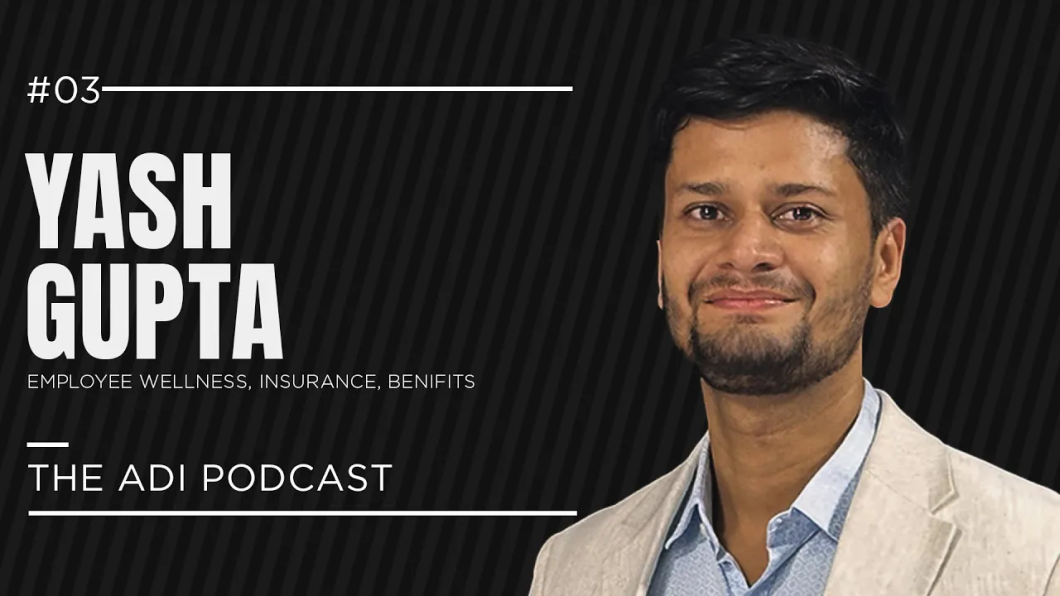
#03 – Yash Gupta: Co-Founder @ Nova Benefits on Employee wellness, insurance & benefits

Yash Gupta is the Co-Founder and CTO at Nova Benefits. Founded in 2020, Nova helps Indian companies make workplaces happier and healthier by pairing group health insurance with preventive care, annual health checkups, teleconsultations, mental health counseling, fitness challenges, discounted gym memberships, and a modern, transparent claims experience. We explore why mental health benefits often see under 3% utilization and how better awareness, access, and product design can change that.

In this episode, we delve into the evolution of employee wellness in the post-COVID, hybrid era.

  • Nova Benefits focuses on moving beyond hospital-only insurance to preventive health, mental wellness, and everyday engagement.
  • Mental health utilization is under 3% despite ~30% needing it, with HR playing a key role in improving awareness and access.
  • Evaluating group health insurance involves checking sum insured, covered members, and co-pay or deductible terms.
  • Improves claims experience through digitized workflows, real-time tracking, and HRIS integrations.

Yash also shares his path from Udaipur to IIT Delhi and Samsung Korea, co-founding Nova Benefits with Saransh Jain, and the philosophy of building a full?stack, problem-first engineering culture that adopts GenAI where it truly improves outcomes. If you lead People/HR or run a company in India, this conversation is a practical playbook for boosting benefits utilization, improving claims, and building a healthier, happier workplace.


Listen On


Episode Timestamps

  • 00:21 Mission of Nova Benefits
  • 02:25 Evolution of Work Culture
  • 05:34 Services offered from Nova Benefits
  • 09:18 Things that an Employee must know
  • 11:22 Start of Nova Benefits
  • 12:00 Ideal Customer of Nova Benefits
  • 13:08 10 Year Mission of Nova Benefits
  • 13:47 Tech that powers Nova Benefits
  • 18:21 Do Employees also get Nova Benefits
  • 19:51 Licensing and Regulations
  • 20:57 The Journey of Yash Gupta
  • 27:05 Go to Market Journey
  • 29:19 Friends and Family Reaction
  • 30:30 Work-life Balance
  • 33:39 Things you wish you knew sooner
  • 40:28 Open Opportunities in the Industry
  • 45:57 Engineering Culture at Nova Benefits
  • 48:10 Approach towards LLM
  • 51:16 Philosophy of Every Engineer being Full Stack
  • 53:35 How did you narrow down on the Problem
  • 01:04:06 What’s Next for Nova Benefits
  • 01:06:28 Pricing Ranges
  • 01:10:54 Reaching out to Nova Benefits

About Yash Gupta

Yash is the Co-Founder & CTO @ Nova Benefits. Founded in 2020, Nova Benefits helps companies get the best-in-class group health insurance plans and wellness benefits for their employees.

LinkedIn  ·  Nova Benefits


Full Transcript

Yash Gupta:

One interesting stat on mental health: when we entered that space as a benefit, we saw typical utilization is less than 3 percent. In a thousand-employee company, maybe only about 20 people are actually talking to a therapist or using that benefit.

Aditya Anand:

Can you start by telling us about the mission of Nova Benefits?

Yash Gupta:

When we started Nova Benefits, we were looking at the market and thought health insurance was an interesting space, right after COVID in March or April 2020. That is how we entered it. Over time, we realized how meaningful and impactful this area could be.

Our mission is to make workplaces happier and healthier. To be happy at work, you need three basics in place: how well you are paid, how meaningful your work is, and your physical and mental health. We believe the first two are better left to the company itself, but health is where we want to be the experts and help HR teams make a real impact.

We start with insurance, which is the most common benefit that almost all companies in India offer now. But we go beyond that, because insurance comes into the picture when you are in a hospital, which is rarely a happy time, except for something like maternity. We work to make even those moments smoother, with claims handled well. Everything before that matters too: preventive care like health checkups, teleconsultations, talking to mental health counselors, fitness challenges, and gym memberships. These are the things we focus on in addition to core insurance, and that is what Nova is today.

Aditya Anand:

One thing you said stands out: making workplaces healthier and happier. That is top of mind in the industry today, with all the talk about work culture and work-life balance. Over the past five years, you must have worked with many companies. How have you seen work culture evolve in your customer segment and in the ecosystem at large?

Yash Gupta:

When we started in 2020, being a startup, we worked mostly with SMBs. Remote work was the norm because of lockdowns. Earlier, many processes centered around the office. If a claim was stuck, someone sat in your office and you went to talk to them. Suddenly, you needed systems people were used to in consumer apps. Remote work changed even basic things like health insurance delivery.

Mental health became a big focus, with people losing loved ones or going through COVID themselves. HR teams needed help on how to support their people. There were vaccination camps and COVID-related initiatives early on. After the second wave, things shifted to more hybrid environments, with some in-person sessions and engagement. Health checkups started happening as on-site camps, where someone would collect blood samples for everyone, which turns it into an event with its own benefits compared to at-home checkups.

Now COVID is behind us, and people are focusing more on things like gratitude and building appreciation cultures. We are building there too: how to help people utilize benefits more. One interesting stat on mental health: typical utilization is less than 3 percent. In a thousand-employee company, maybe only 20 people actually talk to a therapist, whereas around 30 percent could benefit. Increasing awareness and helping HR teams drive utilization is a big focus for us.

Aditya Anand:

Let’s step back to where Nova Benefits enters the picture. Can you share more details about the specific services or products you offer to customers?

Yash Gupta:

Insurance is the base of our pyramid. We help HR teams decide what benefits to offer their teams and benchmark against their industry: sum insured amounts, whether to cover parents, and so on. Then we ensure delivery of a great experience after the policy is bought: smooth claims, minimal manual work for HR, and replacing Excel and email chaos with proper systems.

For employees, we make the claims experience much better, with tracking and transparency instead of a black box where you submit and wait 15 to 60 days without updates. Beyond insurance, we move along a spectrum from active care to preventive care. Annual health checkups are our second biggest offering. Only a small percentage of people use insurance in a year, but as a company you want everyone to feel cared for. Checkups are powerful, because many of us have undiagnosed chronic conditions like hypertension, prediabetes, obesity, chronic pain, or deficiencies like vitamin D. You do not need a bad event to do a checkup. We have seen companies with 95 percent participation, where people discover issues early and make lifestyle changes.

We also support mental health, offering counseling programs so employees can speak one-on-one with a therapist. Counseling can cost around 1,500 rupees an hour, and the people who need it most often struggle to take the first step and to pay. Companies have an important role when employees face burnout, stress, sleep disorders, or personal struggles. We can go into more detail there. On the fitness side, we offer discounted gym memberships and similar benefits. This covers the full spectrum of what we do.

Aditya Anand:

In general, we are all sitting on this big thing we do not really know the details of, and when something goes wrong we ask, what do I do now? For someone who is an employee in an organization that provides employee insurance, what should they find out or be aware of ahead of time?

Yash Gupta:

A few basics:

– Sum insured, because that is the limit the insurance will pay. Is it 3 lakhs, 5 lakhs, 10 lakhs?

– Who is covered: just the employee, or also spouse and children, and potentially parents. Covering family can have a big impact on financial and mental health.

– Co-pay or deductible: understand if there is any co-pay or deductible on your policy. There are other details and add-ons, but these top three cover most needs.

Aditya Anand:

When did you guys get started with Nova Benefits?

Yash Gupta:

In 2020, just after COVID began. Earlier, my cofounder Saransh and I were exploring other ideas. We were interested in fintech and health care, and realized health insurance sits at that intersection. COVID made it clear health was everyone’s priority, including ours, so we got into this space around March or April 2020.

Aditya Anand:

With the breadth of offerings Nova Benefits has today, who would you say is your ideal customer?

Yash Gupta:

Any people-first organization in India that wants to care for employees, ensure smooth claim experiences, and help people feel taken care of. Often you skip a health checkup unless someone pushes you, and when you do it, you might find something early and avoid a bigger issue later. Our ideal customer values these outcomes in addition to insurance. They range from companies with 10 employees, where founders insist on insurance, to companies with 5,000 to 10,000 employees and more.

Aditya Anand:

What would you say is the ten-year mission for Nova Benefits?

Yash Gupta:

To truly make workplaces happier and healthier. I tell my team, we should be able to say confidently: sign up with Nova, and after a year you will see measurable improvements in physical and mental health and overall happiness. For most customers, we want to predictably deliver those outcomes within a year.

Aditya Anand:

As cofounder and CTO, you have a lot to build. Tell us about the tech that powers this whole experience.

Yash Gupta:

There are multiple layers. Initially, it was about bringing an offline, paper-driven process online: defining what a claim means, what a policy means, what is covered and not covered, and explaining it clearly to employees. We built ways to submit and track claims through our application.

On the backend, we deal with over 30 insurers in India, each with their own processes and terminology. Harmonizing that was a big early effort. Then we focused on automating HR workflows, integrating with HRMS providers and places employees work, such as Slack, Google Workspace, and Office 365, so HR is not juggling Excel and email. Insurance adds complexity because you also need accurate family details. Spelling mistakes or date errors matter, so we built systems to manage that.

More recently, we have focused on preventive care. We integrated health checkups into the insurance experience, digitized results, and highlight key takeaways: what is red, amber, and green for you. We integrated with mental health providers and even added benefits like pet care where relevant. We have over 100 benefits that we can tailor per customer.

With GenAI, we have made insurance more seamless: extracting data from messy claim documents, categorizing them, auto-filling claim forms, and integrating with insurers so claims flow without a human in the loop. We also built MagicBot, which answers policy coverage questions. People ask, is LASIK covered, or will a fracture treatment be paid by company insurance? We built chat-based tools for that and also features to drive fitness, such as stepathons. On recognition, we built a simple bot to send gratitude cards to teammates, creating a culture of appreciation.

Aditya Anand:

As a customer of Nova Benefits, managers on the customer side get a portal to manage employee wellness and insurance throughout the organization. Do employees also get access to something?

Yash Gupta:

Employees interact with everything: insurance, health checkups, mental health assessments and counseling, and fitness challenges. The key value for the company is a 360-degree view of all benefits with correlated data. Traditionally, companies had separate vendors for mental health, insurance, and health checkups, sometimes multiple checkup vendors across cities, such as Apollo in Delhi and Tata 1mg in Mumbai. We combine that data, cross-correlate it, and surface insights.

For example, teams receiving fewer kudos on the gratitude board might, a quarter later, show lower motivation or a feeling that their work is not appreciated. You can diagnose issues sooner and act. We are building integrated dashboards for leaders to take action.

Aditya Anand:

In this space, does a startup need to follow any licensing regulations?

Yash Gupta:

Definitely. We deal with sensitive health and company data. On the insurance side, you need a license from the insurance regulator IRDAI in India. We are an IRDAI-regulated insurance broker. We have ISO and SOC 2 certifications, and we are pursuing GDPR and DPDP-related certifications focused on data privacy. Data is central to what we do, and we invest in keeping it safe.

Aditya Anand:

Let’s switch gears. Tell us about your journey, maybe starting with childhood or adolescence. What were your early formative years like?

Yash Gupta:

I am from Udaipur, a beautiful city in Rajasthan. My extended family largely runs trading or manufacturing businesses, so entrepreneurship was what I saw growing up. In 6th or 7th grade, I got into coding through a basic programming book. Around the same time, dial-up internet became common. I learned how to build websites and make some money online through forums and platforms like Fiverr, and I started freelancing. Over time, the projects got bigger.

In 11th and 12th, I prepared for competitive exams and got into IIT Delhi in computer science. Seniors had lots of ideas, which exposed me to building applications and tools for them. That showed me there is more than freelancing: you can build your own product and scale it into a business. In second year, we tried a more serious startup around a college and school alumni platform for mentoring, internships, and jobs. We were naive. We built something but did not yet understand product management, adoption, or business. The big learning was that you cannot focus only on tech. You have to understand customers and problems deeply.

I decided to get more experience, read, and learn. I took a job at Samsung in South Korea, which gave me time to meet people and read. After almost three years, I quit to start up. That was always the plan. I met my cofounder Saransh about six months before I quit. We did a cofounder dating process: side projects, many conversations about values, why we are starting up, interests, and passions. Then we decided to start together.

Aditya Anand:

That is when I realized how similar your and my journeys have been. I can draw so many parallels. I relate to so much of it, but continue.

Yash Gupta:

Back then, in February 2020, I was still working at Samsung. I came to India for a week so we could work together as a final step in our cofounder journey. We were at the Accel Launchpad in Koramangala, and we hit it off. We got more done in seven days than in the previous month. We realized we are both driven, work at the same frequency, care about the same things, and bring complementary strengths. Saransh is great at sales and outreach, and I am comfortable building software. Bring us a problem that does not need years of R and D, and we will solve it. That has been our approach since: pick a problem, solve it, and find customers who face it.

Aditya Anand:

I want to go back to what you said earlier: anyone can build tech these days. I believe tech is no longer the differentiator. It is about positioning and solving real user journeys and outcomes. Tell us about your go-to-market journey. How did you start selling to your initial customers?

Yash Gupta:

Credit to Saransh here. He was clear that you sell first, then build. We had our first customer before writing a single line of code. We made a landing page and pitched that we could help find health insurance for your company. We even ran an experiment on retail insurance for individuals alongside corporate. After we closed the first customer, we built the platform to solve their problems.

We continuously identify customer pain points and build for them, rather than building first and hoping it solves something. GTM-wise, we started with venture-funded companies because that was our network. Saransh had a background in venture capital from working at Accel. Over time, we spun up marketing and outbound sales, which now drive most of our business.

Aditya Anand:

Starting up, how did your friends and family react?

Yash Gupta:

It was easier for me because my family is business-focused. It was harder to convince them to take a job in South Korea than to start a business in India. They were happy and supportive when I came back to start up. Friends were supportive too. Many people want to start up eventually, and I see many juniors and peers starting now. India’s ecosystem pushes you to start and people help each other a lot.

Aditya Anand:

How do you personally manage work-life balance? It is particularly relevant for you and everyone at Nova Benefits, as you are building a large company while enabling wellness for your customers’ organizations.

Yash Gupta:

As a founder, there are fires and opportunities everywhere, and you feel like doing everything. You have to decide what to say no to and let some fires burn so you can focus on the few that matter.

A key lesson is to rely on your people. Early on, as a techie, I wanted to fix everything myself. Eventually, you become the bottleneck. You must invest in people, delegate effectively, and train them so they can own areas. Spend a week or a month enabling someone, and they free you up for a year or more. We have great people at Nova I can rely on, which lets me, for example, spend a Saturday on this conversation without worrying about production issues or customer blockers.

Also, be a living example: focus on physical and mental health. I see a clear difference on days I work out. Even a 5 km run or a weights session gives a mental and physical boost. If you want to perform consistently, physical health has to be there.

Aditya Anand:

Every day that you work out is already a success.

Yash Gupta:

Exactly. Even if nothing else works out, at least you have your workout done.

Aditya Anand:

I want to dive into the journey of learning. Founders inevitably become experts in their domain. How has your journey been learning about the insurance industry, employee wellness, work culture, and work-life balance? What do you know now that you did not at the start?

Yash Gupta:

A lot. We knew nothing about insurance before starting Nova. We learned from first principles: what insurance really is. In most purchases, you pay money and get a product. In insurance, you pay money to transfer risk. If you want to avoid the risk of a big hospital bill for your family, you pay a premium to transfer that risk.

We learned how crucial terms and conditions are: what is covered, what is not, and which things matter most. We learned underwriting and how insurers think about good and bad risk. In B2B, premiums are not fixed. If your group’s claims last year were high, this year’s premium rises. In retail, you get a no-claim bonus if you do not claim. In B2B, you can design bespoke coverage as you want, but premiums are decided by experience, so you must strike a balance between cost and benefits.

On wellness, the biggest learning is awareness and utilization. Initially, we thought we needed ever deeper programs. But if people do not know about the benefits, it does not help. First, ensure the base program is solid. Then focus on awareness and usage. Many vendors list 50 benefits but do not want utilization because it costs money. A year later, 90 percent of employees do not even know they had checkups or mental health support. Changing that has been our journey.

Getting from 0 to 70 percent usage is feasible with good communication. Beyond that, it needs intense follow-up, because people are busy. That is where impact matters most, because the busiest people may need checkups most. We also learned to break problems down: do not look only at an overall 60 percent checkup rate. Slice by team. Maybe sales is at 90 percent and engineering at 40 percent. Enable HR to work with managers so messages land. Our tech focuses on making these insights actionable for HR.

Aditya Anand:

I imagine you work very closely with HR teams.

Yash Gupta:

Yes. That is our primary stakeholder. We help HR teams win by making it easier to help people thrive, and we help them do it in an easier way.

Aditya Anand:

It is a massive space, and there is a lot yet to be solved. What are some open opportunities for an entrepreneur looking to start something here?

Yash Gupta:

In employee benefits and wellness, there are many opportunities. You can go deep into culture building, gratitude, fitness, and community. A big challenge is building communities inside companies so people take care of each other, not just leadership or HR supporting people.

On the insurance side, there are opportunities too.

Aditya Anand:

Let’s get into the insurance side as well. What is open there?

Yash Gupta:

One area I am intrigued by is data privacy and cyber risk. The DPDP Act, India’s Digital Personal Data Protection law, will be enforced this year. Data privacy is becoming a priority. We have all seen breaches leading to spam calls and even scams. Now there are penalties attached. As a company, you must ensure data is safe.

Even if you implement best practices, there is residual risk: a typo, an unhappy employee going rogue, an engineer accidentally publishing a private key, or an intern making a mistake. That is where cyber insurance comes in. It has existed for a while but was on the sidelines. With DPDP, it is becoming important. We are exploring it for ourselves and for our customers.

It ties back to employee wellness in an interesting way: 91 percent of attacks start as phishing attempts on someone in the company. You can have all the tooling, but a human mistake often triggers the risk. Your team must be at the center of security. They need awareness and a culture of security. It is early for us, but there is a lot of opportunity to marry these themes and help companies deal with them.

Aditya Anand:

I want to know more about the team at Nova Benefits. Tell us about the engineering culture and how the team has evolved.

Yash Gupta:

This is close to my heart. At Nova, everyone is a full stack engineer in the broad sense: generalists comfortable across the stack. We are a small team of around 16 to 17 engineers. Nothing is off-limits. No one says, I do not do DevOps, so I cannot touch AWS, or I do not do AI, so I cannot build a POC with OpenAI APIs. We have a distributed skill set. Not everyone does everything, but some are leaning into AI and reading research papers, some into data science with warehouses and pipelines, some into cybersecurity, and some into HCI and front-end craft. One of our engineers even pursued a master’s in HCI. Avoiding rigid labels has helped us a lot.

Aditya Anand:

Can you share more about your initial journey adopting GenAI or your approach to LLMs? Everyone is trying to figure out how it applies to their industry.

Yash Gupta:

The industry is moving fast, with something new every week. When GPT-3 arrived, there was a step change in response quality. It almost felt like AGI at times, though we now know its strengths and limits. Since then, RLHF, better prompting, and techniques like RAG have matured. Multimodal models brought vision, text, and even audio/video together, enabling document and conversational intelligence at scale.

RAG has been extremely useful for us. We sit on a lot of unstructured policy data and coverage details. Now we can answer questions like, I have a fracture and need a plaster cast; is it covered? Earlier, that was unimaginable at scale without rule engines, especially with hundreds of customers and different policies. Now we can represent the data and query against it. We still have to tune carefully to avoid hallucinations. If a document is ambiguous, the AI must not fabricate a definitive answer. We are still learning and improving there.

Aditya Anand:

Tell me more about your philosophy of having every engineer be full stack. That is not the usual setup.

Yash Gupta:

Initially, it was about efficiency and customer centricity. When an engineer owns a problem end-to-end, they keep the customer at the center. They iterate quickly without handoffs between backend, frontend, and others. If solving a customer problem requires AI, they use it instead of waiting for an AI specialist.

I know this does not scale indefinitely. At 100-plus engineers, you need specialists for deep problems. We are already seeing natural specialization in the team. My suggestion for early teams is do not overspecialize too soon, because you do not yet know which problems you will be solving in a year. Train existing people; they carry valuable context while acquiring new skills.

Aditya Anand:

Let’s talk about picking the problem statement. When you first entered this problem space, how did you narrow down what to solve?

Yash Gupta:

Be clear about the kind of business you want to build. There are boutique businesses with a ceiling and those that can become very large. For the latter, you must understand market size and ceiling. Look at broad markets, break them down, and consider geography, because realities differ by country.

Then consider passion and edge. Do you have a view on what you can do differently? We had a spreadsheet with over 150 ideas across industries, with columns for market size, what we could realistically capture, what we could do differently, and how passionate we felt. That is how we landed on group health insurance.

A few insights: even before COVID, healthcare inflation in India was around 25 percent year-on-year, much higher than salary growth. It was becoming unaffordable. COVID created an inflection point. A 10-day ICU stay could mean an 8 lakh rupee bill. Even if you make a crore a year, that is roughly a month’s salary pre-tax. Insurance becomes a critical proxy because payment flows through it.

In 2019, total annual health insurance premiums were around 50,000 crores, split between retail and corporate group insurance. Retail was slightly ahead then. We believed India would follow a path where employers pay for insurance for a growing segment, as government programs focus on the lower-income population. The white-collar, organized workforce would increasingly rely on employer-provided coverage. Group health was growing faster than retail because companies proactively buy for employees.

Corporate health insurance also lacked recent innovation. Retail had seen a lot, but corporate was owned by old-school brokers. It ticked our boxes: healthcare, finance, a big and growing market, limited innovation, and real problems to solve. HRs were unhappy, employees were unhappy, and even insurers were unhappy. One more learning after a few years: willingness to pay is critical. In India, selling B2B is hard, so you must be clear about what people will pay for.

Aditya Anand:

What is next for Nova Benefits over the next 6 to 12 months?

Yash Gupta:

We are building more on the day-to-day engagement layer, beyond checkups and mental health. One goal is to have 80 to 90 percent of users active weekly, with a meaningful definition of active: completing a physical activity check-in, a mental health check-in, sending or receiving gratitude, or similar. We want to make employee benefits a daily conversation where people feel good using our platform. We are also exploring cyber insurance, as discussed earlier.

Aditya Anand:

We might be your customer.

Yash Gupta:

We would love that. Any organization is a potential customer for us.

Aditya Anand:

Can you give examples of pricing ranges or a budget a company should have in mind for employee insurance or wellness services, and how to make the decision?

Yash Gupta:

On insurance, pricing is similar to retail, often with better coverage. For example, if a company offers employee-only coverage with a 5 lakh sum insured, it typically costs 5,000 to 8,000 rupees annually per employee. If you add spouse and children, it may go from around 7,000 to 12,000 to 15,000, depending on demographics. If you add parents, costs rise, but so does value, because most claims are from parents. Covering employee, spouse, children, and parents typically costs around 30,000 to 40,000 per employee per year, give or take. If you are paying an average of 10 lakhs a year in salary, that is under 4 percent of pay. The perceived value of a 4 percent increase in salary versus covering a 5 lakh hospital bill for a parent is very different. The latter often creates much more happiness.

On wellness, costs are more affordable. A basic health checkup can be 500 to 1,000 rupees, but a meaningful checkup with Vitamin D, HbA1c, and other markers is around 3,000 rupees per employee annually. Mental health offerings vary widely: from a basic hotline at around 100 rupees per employee per year to premium plans with quarterly emotional check-ins and high utilization at around 6,000 to 10,000. Gym memberships through B2B channels are often 10,000 to 15,000 per employee per year, still cheaper than retail rates due to volume discounts.

Aditya Anand:

If someone wants to get in touch with Nova Benefits, what is the best way to reach out or grab a demo?

Yash Gupta:

Message me or Saransh on LinkedIn, or go to our website and click Get a Demo. Our website is novabenefits.com.

Aditya Anand:

Thanks so much for doing this. It has been a very insightful and educational conversation. There is a lack of awareness about the insurance industry in general and about specific policies and what your company provides. There is a long road to go, but we take it one step at a time.

Yash Gupta:

Thanks for having me. Great questions. As you said, awareness matters: both about what your company is doing for you and about the organization’s role. People leaders cannot just take a checkbox approach. If you want impact and outcomes, you need people to use the benefits and get value from them. Both go hand in hand.

Aditya Anand:

All the best for Nova Benefits and the rest of your journey.

#02 – Hena Mehta: Founder @ Basis on Investing for women, fintech & building for India

Hena Mehta is the Co-Founder at Basis Foundation. Originally launched as BASIS in 2018, the company is now transitioning into a nonprofit dedicated to empowering women in India to own their financial decisions through financial education, trusted community, and access to the right products.

In this episode, we delve into women, money, and fintech in India, and how Basis Foundation is closing the gap with education-first, community-led solutions.

  • Women approach finances with more risk awareness, long-term planning, and a preference for investing over trading.
  • Builds an education-first fintech with jargon-free learning, knowledge boosters, and safe moderated communities.
  • Focuses on women-only spaces, topic-based circles, and high-signal, low-noise conversations.
  • Experiments with mutual funds, goal planning, advisory-led insurance, a women-first prepaid card, and gold-backed savings.

Hena shares her journey from Bangalore to Wall Street (Goldman Sachs), product roles at EasyTap and Square, an MBA at Wharton, and the leap into entrepreneurship to solve financial inclusion for urban women in India. We discuss mutual funds, SIPs, insurance, credit, UPI, rewards, community building, fundraising, and the path to sustainable impact with Basis Foundation.


Listen On


Episode Timestamps

  • 00:00 Intro
  • 00:22 Mission of Basis
  • 07:09 Origin of Basis
  • 12:07 How women approach finances
  • 14:57 Community Building
  • 19:49 On Basis
  • 28:52 Customer Stories
  • 31:42 Hena’s Childhood
  • 36:49 Finance psychology – differences in USA vs India
  • 39:00 What inspired Hena to return to India
  • 41:02 Advice for young students
  • 44:48 Work cultures in USA vs India
  • 48:30 Being a working woman in India
  • 54:00 Advice for women starting up
  • 58:28 Fundraising
  • 01:04:10 Insights
  • 01:08:37 Fintech
  • 01:14:57 Finance ecosystem in USA vs India
  • 01:17:59 Resources
  • 01:20:45 What’s next?
  • 01:21:34 Best way to join Basis

About Hena Mehta

Hena is the Co-Founder & CEO @ Basis. Founded in 2019, Basis is equipping Indian women with the knowledge and tools they need to achieve financial independence and security.

LinkedIn  ·  Basis Foundation


Full Transcript

Hena Mehta:

Women tend to be more long-term planners. It’s unlikely you’ll find a woman doing a lot of trading; she’ll tend to be more of an investor.

Aditya Anand:

Thanks so much for doing this, Hena. It’s been a while since we caught up, and I’m excited to learn more about you and your journey.

Hena Mehta:

Delighted to be here. Thanks for having me, Aditya.

Aditya Anand:

Absolutely. I think we first connected back when we were working out of Axilor LaunchPad, and we were both early in our startup journeys. Over the years, whenever I thought of the phrase missionary founder, I thought of you. You’ve been carrying this torch and this mission for such a long time. Tell us about yourself and your mission.

Hena Mehta:

I grew up in Bangalore and did my undergrad in the United States in engineering. I started my career on Wall Street as a software engineer with Goldman Sachs and then transitioned into a product role within Goldman. I was there for half a decade. FOMO drove me back to Bangalore, so I moved back in 2014 without a real plan. I had been following the startup ecosystem as closely as I could from New York and realized it was exciting enough to quit a cushy job in one of the most exciting cities in the world and come back to Bangalore.

I joined Ezetap, a startup in mobile payments, as one of the first product hires. It was very different to join a 30-person startup after a 30,000-plus employee MNC in financial services. The payments space was a different side of finance, and there was a learning curve professionally, personally, and culturally. Over two years at Ezetap, I built software and hardware, launched one of Ezetap’s first international markets in the UAE, and then decided it was a good time to go to business school. I went back to the US for my MBA at Wharton and spent some time in the Bay Area with Square in San Francisco as a product manager on Square Capital, the lending arm of Square. That was my pre-entrepreneurial journey.

Basis started in 2018–2019. I had a hypothesis that financial services had largely failed to cater to the needs of women. Women make financial decisions differently from men, view risk differently, and have different goals for their money. Financial services defaulted to men because men historically owned wealth, but that is changing. These thoughts were triggered by my own pain points in my late twenties when I was looking at my business school bills and wondering how I would pay for them. Over two years it was about 200,000 USD, plus the opportunity cost of not earning. It’s a large financial goal that needs planning. I did not want a large student loan to dictate my career choices after business school because I planned to pursue entrepreneurship. I had worked and earned well for seven years, but I hadn’t invested or done real financial goal planning. It just never struck me. I did save a little, but I didn’t invest.

I ended up paying for business school by liquidating my 401(k), thanks to Goldman, took a small loan I knew I could repay regardless of my career path, and my family pitched in a little. Still, I wondered why I hadn’t planned better even though business school was a goal for years. I also felt men tend to think and talk about this more. That was the trigger. I started looking at the space and discovered that most consumer fintech apps, even new-age ones, had 90-plus percent male user bases. When I spoke to women in my network and communities in urban markets, nine out of ten were in the same boat as me: they had goals and aspirations, understood the importance of planning, but didn’t know where to go. They defaulted to fixed deposits and gold, and then stopped.

These were reasons I decided this mission needed to be addressed. From a business perspective, it’s a large, underserved, growing market. It will only get more relevant. There is money being left on the table by existing players. Could we design products, experiences, and content to get more women to invest, take on credit responsibly, buy adequate insurance, and participate across the spectrum? There are massive white spaces when it comes to women as adopters and customers of these services.

Aditya Anand:

When did you officially get started?

Hena Mehta:

I started looking at the space in 2018, right after my MBA. My cofounder, Deepika, joined about a year later. The first few months were about validating that there was something here and talking to as many potential customers as we could. I was the founder of Lean In Bangalore, a professional network for women affiliated with Sheryl Sandberg’s foundation in the US, and that group was a great set of women to test our initial ideas with. We launched the first version of our product in December 2019.

Because there was no playbook globally for a category like this, we had to learn as we built. The first version of our app focused on education: bite-sized flashcard-style learning modules for personal finance, which we called Knowledge Boosters. We extracted away complexity and designed for busy women juggling multiple things, giving them relevant information. One of my favorite early stories was a mother of a one-year-old who said she would log into the Basis app at 10 pm after her child was asleep and chores were done to learn.

We then experimented with communities. Our hypothesis was that money is inherently social, especially for women. Men often talk casually about the stock market, real estate, or crypto with friends and colleagues; those conversations rarely happen among women. We wanted to create a safe, comfortable space where women could learn and discuss without feeling judged. Initially we created an open community that anyone could join. Not surprisingly, men tended to take over the conversations and chats, while women consumed content more passively. We then pivoted to a closed, women-only community with approved members, and saw the floodgates open. Within three months we had about 5,000 women join organically. Conversations ranged from basic questions such as what a mutual fund is, to complex life events like navigating finances during a divorce or separation. That validated the need for such a space. Education and community were our starting points because knowledge and trust are the biggest hurdles before a woman makes her first investment, gets her first credit card, or buys health insurance. We later experimented with financial products as well.

Aditya Anand:

So the mission of Basis is essentially to empower women in India with financial knowledge?

Hena Mehta:

Yes. Financial knowledge, a space to discuss money, and eventually financial products you can adopt to manage your money effectively. It’s a learn, discuss, transact journey that continues through life. We were building a financial services destination hyperfocused on urban women in India.

Aditya Anand:

You’ve gone deep into how women approach finances. How do women approach finances differently compared to men?

Hena Mehta:

There are several patterns we’ve noticed. As a book recommendation, Warren Buffett Invests Like a Girl highlights Buffett’s traits that are considered feminine and make him a prolific investor.

First, women tend to be more long-term planners. It’s less likely you’ll find a woman actively trading; she is more often an investor. Second, women are often labeled risk averse, but we see them as risk aware. Women like to take risks but want to understand what they’re getting into before they leap. Third, women ask a lot of questions, in a very good way. If you’re putting your money somewhere, you should understand what’s going on. For example, in our community, when we discussed mutual funds, someone asked, what happens if the fund manager leaves? Where does my money go? It’s a great question that rarely comes up elsewhere. Lastly, women tend to think beyond themselves and consider family and peers more. When we experimented with health insurance, we saw women buying not just for themselves but also for parents, in-laws, and even asking to replicate policies for siblings. There’s a communal mindset of caring for others alongside oneself. These are broad generalizations, but they are consistent observations.

Aditya Anand:

Community and the social angle seem essential to enable more female participation in the financial ecosystem. How do you enable that community through Basis?

Hena Mehta:

Community building is harder than people think, and we learned as we went. Building the Lean In community was my first foray into starting and nurturing a community, and those learnings helped. Communities need to feel intimate so members feel a sense of belonging. A WhatsApp group with hundreds of people is not a community. Community has to be part of your strategy from the beginning; it can’t be bolted on later. It should be more about giving than taking. Many consumer companies use communities for product experiments, user interviews, or crowdsourcing features, which can be useful, but the core should be about adding value. That applies both to the people building the community and to members themselves.

Our first community was a heavily moderated Facebook group, given the topic was money. We maintained the safe space rigorously, kept it non-commercial, and ensured relevance. Money is highly contextual, so for a women-and-money community we needed relevant information, minimal jargon, and timely discussions. If something was happening in the market, we informed the community and facilitated discussion.

It was a mix of online and offline. Bonds deepen offline, though COVID forced us to pause offline plans. We built the community feature entirely in our app so we could control the experience. As the community scaled, we asked how to maintain intimacy. By the end of last year, Basis had 1.6 lakh women on the app; that’s a user base, not a single community. We created circles within the Basis community, by topics such as gold or crypto, and by identity such as moms or freelancers. That increased relevance but was harder to manage. We’re still learning and striving to create a community women feel comfortable in and return to whenever they have a question or concern about money.

Aditya Anand:

Let’s get into financial products and asset classes. As a woman joining the Basis network, step one is access to the community and a safe space to have open conversations about money with like-minded individuals. What is the next step? What products or solutions enable the journey into the financial ecosystem?

Hena Mehta:

We never forced anyone to do something they weren’t comfortable with; the intent has to be there, and we enable it. Early on, Basis was envisioned as an investing app for women focused on wealth and goal planning. We obtained our SEBI RIA license, partnered with five AMCs, and built our own asset allocation and fund selection algorithms for mutual funds, plus a goal-planning experience. We recommended funds and handled execution. Most of our community were beginners, starting small SIPs or hybrid funds. We found that the time from intent to action could be long, and it was a push-driven experience. It was also operationally heavy with significant customer support, and we were a team of five or six. We asked ourselves what we were really trying to solve and whether we were playing to our strengths.

We parked those learnings. One of the most popular goals was a career break, which is not commonly planned for but is more frequent among women. How much should I save and invest so I can take two years off and still be covered? That was an example of women-specific goal planning.

We then partnered with an insurance broker to explore the insurance space, which is highly untapped. Women tend to be underinsured in both health and life. We ran a pilot with advisory calls in conjunction with the broker and helped sell some policies. We learned that in order to scale, we would need to lean into an advisory model. As my cofounder Deepika often says, insurance in India is sold, not advised. We also learned about women’s specific health needs that existing plans didn’t cover well. As a personal anecdote, when I called an insurance adviser on another platform and asked about IVF coverage, he thought I meant IV drips. I had to explain IVF and why health insurance should consider it, though it still typically doesn’t. We realized we might need to cocreate or go upstream into manufacturing to build insurance plans designed specifically for women, rather than force-fit existing plans.

What ultimately clicked was our card. We announced a waitlist for the Power Card, India’s first card designed for women from the ground up. The original idea was a credit line over a prepaid instrument, with the tagline Give yourself some credit. The waitlist exploded, and we knew there was something there. It tapped into existing consumer behavior rather than requiring a behavior change. After regulatory changes, we pivoted to a prepaid model. It was a RuPay card with a women-centric rewards ecosystem we built in-house, partnering with about 30 women-run or women-focused brands across menstrual health, personal care, wellness, apparel, and more. The idea was to align incentives with what our audience cares about.

About 40 percent of our card users came from our community, validating the content-education-community-first model as a path to product adoption. For many users, this was their first card, not counting debit cards. The prepaid construct worked well. Users liked that it wasn’t a credit card, which they associated with overspending, and it wasn’t linked to their bank account like a debit card or UPI, so their entire balance wasn’t exposed while spending. A load-and-spend model helped with budgeting and controlling monthly expenses.

We planned to launch additional financial products on top of the card to capture users in a low-friction way: savings, then eventually lending and more. For savings, we launched a goldback feature. Instead of cashback, we invested rewards into digital gold so users could see a gold portfolio build up without extra effort. We leaned on behavioral insights to automate financial habits for women who have competing priorities.

The gaps exist across credit, insurance, investing, payments, and more.

Aditya Anand:

Big gaps are still remaining.

Hena Mehta:

Absolutely.

Aditya Anand:

Any customer stories or testimonials that stand out to you?

Hena Mehta:

There are a few. I mentioned the mother who learned about life insurance at night on Basis after her child was asleep. During COVID, a young woman shared that her father suffered a heart attack, which pushed her family to learn about wills and succession planning. She gathered a group within our community to discuss it, which shows the power of community.

Another woman learned what term insurance was on Basis and had a better conversation with her husband. Together they bought a plan that worked for them. A young woman said her father managed all her money and parked it in fixed deposits. After learning about equity mutual funds, she challenged him and said that given she was 22 or 23, equity made more sense for her risk profile. That only happened after she was educated.

On the card front, women loved that there were offers and rewards on things you do not usually find on other payment products. We often say personal finance is moving toward personalization; it is not one-size-fits-all. Many card products today are built for traveling men. We reimagined rewards, and the feedback was strong. People also loved goldback, creating their first portfolio beyond cash or bank deposits, which sparked more interest, questions, and confidence to explore other asset classes.

Aditya Anand:

I want to switch gears and talk about you. Tell us about your childhood and formative experiences that shaped your worldview and led you to start something like this.

Hena Mehta:

My worldview is still evolving. I had a fairly stable childhood in Bangalore. My dad worked in corporate at Hindustan Unilever for 31 years. It was a meritocratic journey for him. He didn’t come from wealth, went to IIM, and worked his way up. At home, education was everything, which drove me to focus on academics and get into a good college. We were fortunate that we could afford studying abroad.

Money was never a dinner-table conversation. Even today it’s a hard topic with my parents. I didn’t know our household income. It was best not talked about, which is typical in Indian families. In my late twenties and early thirties, I realized I should put my money to work. My dad encouraged me to invest when I started my first job, but I thought it wasn’t for me and feared losing money.

Failure was allowed at home. When I first took the SATs, I got a very low score. My parents didn’t say anything and let me handle it. I didn’t go to a class and thought I could do it on my own. That self-realization was more powerful than being told what to do. I took it again, did decently, and got into a good college. That approach to failure shaped me, and it’s essential in startups. You will fail multiple times, and the question is what you learn for next time.

I have an older sister who is a big influence. She’s super ambitious, and as the younger sibling I followed her path. She pursued undergrad abroad and paved the way for me. We’re Gujarati by origin, but I have never really lived in Gujarat, though we have a lot of family there. Money was never a topic at home, which I think also stems from a corporate versus business family background.

Aditya Anand:

You stayed in the United States for a few years. How is the attitude and psychology toward finances different in the US compared to India?

Hena Mehta:

Fundamentally, humans share common behaviors around wealth and health, which behavioral science studies. The US is a more developed and mature market. Capital markets have existed much longer there. I didn’t invest much then, but as a 21-year-old at Goldman, a colleague mentioned buying Facebook stock, and we had employee brokerage accounts, so I tried it. Credit is far more developed in the US. In college, I got a low-limit credit card and started building a credit score. In India, many people only encounter these concepts when they are working professionals.

Otherwise, the big challenges are similar: retirement planning, maintaining a long-term view, and not being swayed by volatility. I love behavioral economics and see a lot of commonalities globally.

Aditya Anand:

What inspired your shift from Wall Street to starting a startup in India?

Hena Mehta:

FOMO. It was unconventional when I did it. The Indian startup ecosystem was nascent. Flipkart was the poster child and up-and-coming. Friends who had moved back were doing exciting things. I was single and could be anywhere. It might have seemed irrational because Goldman had applied for my green card, and I was doing well, but I wanted to be part of something faster paced with high growth and lean teams. I could have done that in the US, but being on an H-1B visa adds hurdles to doing something entrepreneurial.

I sold my stuff in New York, booked a one-way ticket, paid for some extra baggage, and came back. It helped that I moved back home to Bangalore, which is also a startup hub. It was the best decision I’ve ever made.

Aditya Anand:

For an early-career professional or a young student in India deciding whether to build a career and life in India or the US, what would you advise?

Hena Mehta:

It’s very personal. I appreciated the early professional training I got in the US. India has evolved a lot, and opportunities exist here too, but that early professionalism in the US built strong foundations for me. You can’t compare the scale of the US economy with India, but look at growth curves. Find a place where you’ll be professionally challenged and not too comfortable. Avoid following the herd. The US job market is cyclical.

For education, if you can afford it and it fits, US education on average can be stronger than average Indian education. For careers, pick the place that will challenge you. For fresh graduates, getting foundations at a large, established company is invaluable. Startups can be glamorous and high learning, but they are also very hard and throw you into the deep end. My medium-risk view is to build a base first and then take bigger risks. The high-risk view is if you have a great idea, go start it, but know the odds.

Aditya Anand:

How would you compare work cultures and work ethic in the US and India?

Hena Mehta:

They’re quite different. In India, work and life blend more. In the US, it’s about work-life balance with clear separation. In the US, I would never call a colleague after hours unless it was critical. Here, it’s more acceptable, which can be both helpful and annoying.

The US has more systems and processes, being a mature market. India is more chaotic, and my India experience has been in startups. There’s method to the madness in the US, which can be less chaotic but sometimes boring. Being a woman at work in India also felt different to me. I moved back at 27. That led me to start the Lean In community to connect with other women professionals. In the US, I never felt I was treated as a woman in the workplace in the same way, though the context differs since I was at a large corporate there and in startups here.

One example from Ezetap: an acquiring bank partner was visiting the office. The men were asked to set up product demos, and the three women were asked to stand at the entrance with flowers. Things are changing, but experiences like that were common.

Aditya Anand:

Female labor force participation in India is low. What has to change at home or in the professional environment to encourage more participation?

Hena Mehta:

I’ve been thinking about this more since my motherhood journey began. Multiple things need to change. Beyond better support at home from spouses and extended family, and more mindful workplaces, I believe early childhood care needs disruption in India. My two-and-a-half-year-old daughter goes to a full-day preschool called Papagoya in Cambridge Layout and Frazer Town. When we looked for options, the full-day model barely existed. Many places offer only an hour or two in the morning, which doesn’t solve childcare for working parents.

Childcare needs to be reimagined. It also requires mindset shifts. People asked how we were okay with our toddler being away from home for seven hours. It works because the place is excellent, my daughter is engaged, and we are happy. I speak from a place of privilege, but childcare is what often bogs women down. COVID worsened female labor force participation; I can understand why it became overwhelming and women quit work. Women are time-poor. We need to lighten the workload through partners, support systems, and childcare institutions.

Women may think they can return to the workforce after a few years off, but it’s really tough. You may not have the same path or income. It’s not starting from scratch, but it’s a big career hit. If that wasn’t your goal, systemic change is needed. If I ever do another startup, it may be in early childcare so the burden doesn’t fall entirely on women, and their lives can continue alongside motherhood.

Aditya Anand:

Right. And add being a founder on top of that.

Hena Mehta:

Why give up on your dreams? At Basis, we often said there are four Ds that affect anyone’s financial situation, and they tend to affect women more: divorce, death of a spouse, death, and disaster such as COVID. My dad listened to me say this on a podcast and suggested a fifth D: dreams. You may want to start a business, continue working, or pursue something meaningful. Parenthood should not be the reason you give up on it. It’s a choice, and many are happy with choosing differently, but if you want to pursue something, the system should help, and that space needs disruption.

Aditya Anand:

I dislike the term female founder. Why isn’t it just founder? For a young woman in India looking to start a startup, what would you advise? What to watch out for, and how to approach it?

Hena Mehta:

I’ve gone back and forth on labels such as female founder or women in fintech. They exist for a reason, often to drive equity. Do I like being called a woman founder? No. I’m a founder doing hopefully good work. I’m on a panel at a fintech conference titled Women in Fintech. I said yes because these discussions are needed, but success is when they no longer need to exist. At Goldman, we had an internal Women in Tech network, and the founder said success would be when it didn’t need to exist.

To young women looking to start up: just do it. Personally, I didn’t face many of the horror stories you hear. It is hard. I had a baby while building a startup during the tail end of the pandemic. Everything is figureoutable. When I considered starting a family, I thought maybe I should wait until our Series A, then realized I controlled neither the timing of a Series A nor of having a baby. Life plays out how it does. Women figure things out.

There are many more role models now than when I started Basis. You can’t be what you can’t see. The more women you see, the more normal it becomes. Even with our name, we avoided Her or She in the brand. Labels can silo you, which goes against our purpose. I hope the labels fade as more women become founders and we are all simply founders.

Aditya Anand:

Speaking of horror stories, in a previous startup, my cofounder was a woman and CEO, and I was CTO. During a pitch, the VC kept asking questions to me, and she had to answer. It was a weird, clearly patriarchal behavior.

Hena Mehta:

Unfortunately, that doesn’t sound unusual. As an all-woman founding team, we were advised to get a male CTO or senior leader so people would take us more seriously, which is disheartening. I raised our last round when I was very pregnant. I was thankful it was over Zoom so no one could see me waist down. It was a real fear that a visibly pregnant founder pitching for funding would lead to questions about bandwidth and priorities. Thankfully, it never came up. These biases exist, but it’s changing. It’s now more common to see women having babies and building startups successfully.

Aditya Anand:

How was your fundraising journey for Basis? How did you find early believers?

Hena Mehta:

Very hard. Fundraising is hard in general; as a woman building for women, it adds another layer. We eventually found great early believers, both institutional funds and super angels, but it took eight or nine months instead of the three to four months you often hear about. You hear more nos than yeses; you only need one yes, but we probably had 70 to 80 conversations.

My background and network helped. A mentor once told me a brand-name business school helps a woman be taken more seriously. Still, we were asked questions like, if you’re building an investing app, do you realize you need a license? We already had a SEBI RIA license. Assumptions about our credibility were common. Most VCs didn’t have a thesis for a women-focused space, with no global playbook or success story to point to, which added skepticism. VCs are mandate-driven; if you don’t fit, they won’t invest even if they like what you’re building.

It required thick skin and generated self-doubt, but you come out stronger. If it doesn’t kill you, it makes you stronger.

Aditya Anand:

Now you’re about six years into the journey. What are some things you know now about building a startup, finances, or women that you didn’t know starting out?

Hena Mehta:

It’s far less glamorous than it looks on LinkedIn. Behind the founder title is a lot of grunt work and rapid problem-solving. In hindsight, I wish we had experimented more before building the platform and fundraising. Women are underserved, but also a tough market to crack, especially in financial services where the mission involves behavior change. Products that require behavior change are harder to drive adoption for. Painkiller businesses reach PMF and scale faster than vitamin businesses. Personal finance is a need to have, but if consumers treat it as nice to have, you must innovate on experience, product design, and even business models.

On capital, if you can build without fundraising, consider it. Fundraising consumes mindshare and can make you optimize for the raise rather than for a sustainable business. Sometimes those align, sometimes there is tension. The uncertainty is real. Your day can swing from highs to lows within hours. You need thick skin and the ability to get up repeatedly.

Aditya Anand:

Let’s talk fintech. For someone starting now in fintech, what would you advise? What opportunities exist? What to watch out for? How to think about regulators?

Hena Mehta:

Fintech in India is evolving in a positive direction. If you’re building in fintech, deeply understand the why. In consumer fintech today, there is little that is truly disruptive in a constructive way. It’s easy to be swayed by broad statements like the credit market is huge and untapped. Know exactly what you’re changing and how it’s different from the status quo.

Have a view on regulation. Regulators tend to follow innovators, and that’s their job. Ask whether what you’re building aligns with the spirit of regulation and understand the risks. Also, fintech isn’t a side project. If you’re moving money, you need robust systems and thoughtful planning. You can do MVPs, but they must be fully baked for safety and compliance.

Opportunities abound in infrastructure, B2B, credit, and delivering great consumer experiences. I’m a big fan of embedded finance. Money is contextual. People don’t think about banking in isolation; it emerges in specific contexts and life events. I see more personal finance moving into embedded plays where finance becomes part of other day-to-day activities and triggers.

Aditya Anand:

Any examples? Is BNPL one?

Hena Mehta:

BNPL is one example: lending at the point of sale driving adoption. Education loans could be embedded into college application platforms; that’s how I took a small loan for business school. For investing, you can integrate with payroll to automate and supercharge SIPs so money flows into a fund for the future without manual steps. For less digital examples, divorce disproportionately affects women financially. Could divorce lawyers bundle financial advice, portfolio reviews, and liability assessments into their services? Banking will increasingly feed into the other things we do and the events we experience.

Aditya Anand:

Since you’ve spent time in US finance as well, what are the biggest differences between the US and India? For example, UPI has transformed P2P payments in India, but the US still leans on older methods.

Hena Mehta:

Fintech as a term took off in the US after 2008 when people lost faith in banks; fintechs were there to disrupt banks. In India, fintechs collaborate with and complement banks rather than replace them. Consumers’ trust remains with banks, so the role of fintech is to enhance infrastructure and experiences.

Another difference is how regulators, government initiatives, and industry collaborate in India. India Stack, UPI, and other initiatives are government-driven but built in collaboration with industry and regulators. There’s tension where needed for consumer protection, but overall agendas are aligned, which is powerful.

Aditya Anand:

What learning resources would you recommend to a mid-career woman, say late twenties, who wants to learn about investing?

Hena Mehta:

Start with the Basis app. We designed Knowledge Boosters to cover what you need to know in a succinct, non-overwhelming way. If you search randomly online, you can get bombarded and deterred. Find a resource that extracts complexity.

Second, talk about money with your friends. Bring up retirement, home-buying plans, and how you intend to finance them. Sharing experiences normalizes the topic and helps you learn. Even if you’re not the sole decision-maker at home, you can take these conversations back.

Third, just start. Create a small SIP, even 500 rupees. It builds confidence and curiosity over time. Also, get your own credit card rather than an add-on. Building your personal credit profile matters.

Aditya Anand:

What’s next for Basis?

Hena Mehta:

Given the fundraising landscape, we have been thinking about long-term plans. We are converting Basis into a foundation and will operate as a nonprofit going forward with the same mission: getting more women to own their financial decisions and increasing financial knowledge and awareness. Same focus and mission, different avatar. We’re setting up the foundation and will embark on a different kind of fundraising journey that gives us continuity on the mission.

Aditya Anand:

If someone wants to join Basis or learn more, what’s the best way to get in touch?

Hena Mehta:

You can find my cofounder, Deepika Jaikishan, or me on LinkedIn or Twitter. We’re active and respond to almost every query. The foundation has a small team in place, and we’ll look to bring on people passionate about the mission. We’ll see where this avatar of Basis takes us.

Aditya Anand:

Thanks so much for doing this. This has been a really interesting and insightful conversation for me and, I’m sure, for the audience as well. There’s a long road ahead, but we have to keep moving forward. Hopefully one day soon, this won’t be a topic we need to explicitly discuss; it will just be naturally there.

Hena Mehta:

Thank you so much for having me.

#01 – Yatin Varachhia: Co-Founder @ NOSH on Automating Cooking, Hardware Startups & Life

Yatin Varachhia is the Co-Founder at Nosh. Founded in 2018, Nosh is automating home cooking with a fully automatic robot chef that dispenses ingredients and spices precisely, follows app-guided recipes, and delivers food to your taste without standing over the stove.

In this episode, we delve into the future of home cooking and building a hardware startup in India.

  • Nosh started from a craving for authentic “Gujju” food and evolved over 5 years from POC to launch.
  • Works through app-based recipes, ingredient tray, built-in tanks, precise dispensing, and automatic stirring.
  • Cooks curries, sabjis, rice dishes, breakfast items, pasta, noodles, soups, and sweets.
  • Offers taste customization for spice, salt, oil, doneness, and gravy across 200+ editable recipes.

Yatin also shares his journey from IISc and Analog Devices to wearables at Lumos (Kickstarter) and why Ather Energy’s playbook inspires Nosh’s product-first path.


Listen On


Episode Timestamps

  • 00:18 Starting NOSH
  • 01:49 Target audience
  • 13:03 Customizations
  • 21:53 NOSH Team
  • 24:45 Education
  • 27:44 Government
  • 31:17 Prototyping
  • 34:42 Financing
  • 36:56 10 Year Vision
  • 38:40 Advice for Startups
  • 42:21 Hardware
  • 45:11 Journey before NOSH
  • 47:23 Deciding to startup
  • 51:50 Typical day at work
  • 53:20 Work-life balance
  • 57:53 Yatin’s role
  • 59:48 Market
  • 01:06:22 Capabilities
  • 01:07:38 Supply Chain
  • 01:09:43 Advice for Kitchen Appliances
  • 01:12:29 Resources
  • 01:13:53 Role Models
  • 01:15:24 What’s Next?
  • 01:17:12 How to reach

About Yatin Varachhia

Yatin Varachhia is the Co-Founder of Nosh, a hardware startup building a fully automated robot chef for home cooking. He previously studied at Indian Institute of Science and worked at Analog Devices, later building wearables at Lumos, before starting Nosh in 2018.

LinkedIn ·  Nosh


Full Transcript

Yatin Varachhia:

We want products that automate everything that happens in the kitchen worldwide. That is our vision, and we will keep building toward it.

Aditya Anand:

Can you start by telling us a little about your journey? How did you get started with Nosh? How did you get the idea, and how has the journey been so far?

Yatin Varachhia:

It started because we are both working, and we are Gujarati, so we crave Gujarati food. We tried to teach our cooks a few tricks, but it never worked perfectly. That inspired the idea that there should be something that gives us food as per our taste. I spoke to friends who had moved to new cities and realized everyone faced the same problem. Many just say, “chalega, we’ll manage,” but at the core they are not happy. They earn well, but they miss this after moving to a new city.

With that insight, we started experimenting with mechanisms. When we set up the first kitchen, the question was, can it be done? It felt technically complex for a device to cook completely automatically. We worked on mechanisms and dispensers, getting things right. It took five years of R and D before we could launch the product. That has been the main inspiration and journey so far.

Aditya Anand:

I’m familiar with the problem. My partner and I both work, and we know the challenges of getting good home-cooked food that we both like without spending a lot of time. Ordering or eating out gets unhealthy. Trying to get home-cooked food never quite gets there. There’s a gap to be addressed. It’s interesting that you’re solving this with an appliance people can purchase and use at home. What kind of customers would this appeal to?

Yatin Varachhia:

We started with dual-working couples and families as the target audience. We realized that people who are choosy about their food are the first adopters. There is an adoption journey, and those who are choosy and trying many things to get food the way they want will buy first. This is true in India, and we also see a low-hanging fruit in NRIs in the US, UK, and Australia. That will be our other early market. It will have its own adoption curve, but these segments will adopt first and then it will spread.

At the price point we’re planning, I feel that even a single working household that is decently well-to-do will adopt it eventually. When I go to my hometown, all my bhabhis and relatives ask for it. Our generation, millennials and younger, generally do not want to spend time cooking. Our mothers’ generation perfected food, but the new generation really does not want to. Many do it because they feel it’s the only way they have value in society, but overall they’re looking for convenience in food.

Aditya Anand:

Can you tell us more about how the actual product works?

Yatin Varachhia:

It has recipes you select from a mobile app. The app guides you through preparation steps. It comes with an ingredient tray. You put the ingredients into the tray, insert it, and command it to cook. It follows the recipe and cooks completely automatically. Spices, water, and oil are stored inside the product. It dispenses them as per the recipe and your customizations. You can customize spice level, salt level, and oil level so you get food as per your taste.

Aditya Anand:

What kind of things can you cook with it? Can you give examples of popular dishes?

Yatin Varachhia:

It can cook curries such as paneer, palak paneer, and chicken curry. It can make dry sabzi like cabbage sabzi and bhindi sabzi. It can make rice dishes like pulao and simple biryani. It can make breakfast dishes such as poha and upma. It can make sweets like carrot halwa, suji halwa, and kheer. Broadly, whatever you cook in a pan or pot, it can make. It can make pasta and Asian dishes like chow mein. It is quite versatile and can also make soups. Essentially, whatever you do in a pan, this can do automatically.

Aditya Anand:

When did you get started on this?

Yatin Varachhia:

The inspiration was around 2017. We went full time in early 2018, around March. We started building a proof of concept. Our first question was whether we could really do it. We built a POC that was quite large, but it could cook good food. From day one, the idea was we would not make a device if it could not make food that tastes like human-cooked food. We never wanted people to say, “this tastes like machine-made.” If we achieved the taste, we would build the company, otherwise not. So in 2018 we improved mechanisms and got the taste right. By the end of 2018, we had a POC that cooked excellent food, but it was big and didn’t look good.

During that time, we got a lot of interest from cloud kitchens such as Swiggy and Rebel Foods. We worked with them to build a product for their requirements through 2019 and early 2020. It was a small pivot. We were open to both B2C and B2B and were trying to understand where the pull was. But around 2020, when COVID hit, their businesses were affected and their thought processes changed. They had to move toward cold-chain systems because revenue was not predictable and food waste is a major cost. When those companies go for profitability, they often end up adopting cold chains, which hit us during COVID.

We went back to the whiteboard and asked where we could create value in the restaurant industry. On the food side, there are enterprises (large cloud kitchen brands), SMEs (mom-and-pop restaurants), and home kitchens. We debated where to go. The enterprise opportunity felt weak and more like customization services, not a scalable product opportunity. We then spoke to many SMEs and realized they expect one person to do many things and focus heavily on cost savings. We could not save cost for them because workers do prep during on-shift and cleaning and prep off-shift. It was not a perfect opportunity for mom-and-pop restaurants.

We chose home kitchens, which were always close to our heart because that’s how we started. Even while we explored cloud kitchens, we had a project slowly building Nosh. We went full in again from September. The good thing is we built a fully working alpha prototype by early 2021. We used it for apartment demos to show capability and get feedback on expectations. We tried to take preorders to see who would convert first and to capture concerns like cleaning. We started trials, put units in different customers’ houses, and gathered feedback. That was the alpha prototype.

We then built a second prototype, beta one, made a few units, circulated them, and got feedback. The biggest time sink was balancing effort saved in cooking with effort required for cleaning. Making cleaning easy and ensuring hygiene took many iterations with direct customer feedback. Reliability also took time. It almost took two years to get cleaning and reliability right. After alpha, we had beta one, beta two, beta three, and beta three became the final product.

Aditya Anand:

I remember attending a Nosh demo on the terrace of your office a few weeks back with your cofounder, Amit. It was a wow experience: you put in the ingredients, turn it on, select the recipe, and in twenty minutes your food is ready. That was a eureka moment. You spoke about good food, and food is very personal. People have their own preferences for taste and how they want food cooked. In terms of customizations of taste and preference, what features are there in Nosh to control this?

Yatin Varachhia:

I agree. Every household has a different taste. People say food taste changes every 200 kilometers. I would say it changes in every household. The major variables are spice level, oil level, and salt level. We provide customization for these. We are also adding per-recipe customization for doneness and gravy thickness, from watery to thick. We plan to let users customize our recipes. It comes with about 200 recipes, and you will be able to tweak and make them your own.

Initially, we planned to give a recipe creation app. We created it and gave it to customers, but overall it was too much effort for small changes. One insight is that across India, the types of ingredients are quite similar. Spices differ widely. The main taste differences come from different spice blends across states. With limited ingredients, you can build many recipes by changing the spice blend and a few steps. With recipe editing, we can create a large number of customer-generated recipes. Our plan is to provide edit and save/publish features so we have a lot of customer-generated content on the platform.

Aditya Anand:

How do you get started building something like this? What does the process look like to come up with the first prototype?

Yatin Varachhia:

There was a lot of thought. In an Indian kitchen, there are many processes: roti making, chopping/prep, cooking sabzi, cooking dal, etc. We identified what to automate. Dal and rice are easier. A simple pressure cooker, rice cooker, or instant pot-type product solves that. Roti is complex but has one outcome. The taste-determining products are curries and sabzis, which define your food experience at home. We chose that because you can build recipes and create a large product catalog. Each recipe is like a micro-product. Creators can get involved and drive word of mouth. It is a more positive outcome-based product than a single-purpose device. Also, this process has global appeal. Every culture has dishes done in a pot or pan, so it addresses many cuisines.

The key part was getting dispensers right. The biggest concern was the spice dispenser. It has to be super precise, not get stuck, and dispense the correct amount. We focused on that first. If we could not get spices right, there was no point doing other things. We got it right after a couple of iterations. The first ingredient dispenser in the POC was not well thought through. It was basically a funnel. You opened it and food fell, but you had to shake it, things stuck to the walls, and there were many challenges. We then developed a new ingredient dispenser that we use today. Then came the stirring mechanism. The stirrer took almost 27 iterations at the idea stage to get right, because it has to manage different types of food: gravy, semi-gravy, dry; tiny pieces like suji, and big pieces like chicken. It had to be universal. We got it right at the idea stage and patented it.

We underestimated how complex food is. I knew hardware before, but food I knew from a distance. When we worked on dispensing, we realized how many types of ingredients and behaviors there are. For example, we had a problem where a bit of chicken skin got stuck under the dispenser and would not fall out, even with weight above it. We faced many such challenges.

Aditya Anand:

You mentioned earlier the difficulties in hiring and that the kind of talent needed for this is still rare in India. What’s the team setup like? How did you build the team?

Yatin Varachhia:

We are a 27-person team, mostly engineering. Our approach changed over time. At the idea stage, we mostly hired freshers who had participated in competitions, built robots, or participated in ROBOCON. They had to be passionate about this problem. That worked well. They thought like owners and iterated fast. In two months, we would have eight mechanism variants built.

Once the alpha prototype came out, we looked for people who understand design for manufacturing. That is a scarce skill. We brought in experienced people, at least four-plus years, for DFM. The POC-to-product journey required experienced people who contributed to making a product ready for production. Sometimes we had to go back to the idea stage because certain mechanisms could not be manufactured at scale. For example, our spice dispenser worked beautifully but only with CNC-machined metal parts, which were costly. The same mechanism did not work in plastic. We had to redesign the entire mechanism for manufacturability.

Aditya Anand:

Going on a tangent, what do you think is missing in the education system? Your hires may come from electrical, mechanical, or robotics. What can Indian colleges do better?

Yatin Varachhia:

Curricula are outdated. Much of what mechanical engineers learn is not usable in industry. DFM and plastics are covered as a single subject in the final year, along with sheet metal, which is not enough. Universities do not demand hands-on work. Students have to participate in competitions or do side projects to get hands-on experience. A topper with no hands-on experience is often not useful initially. That is the biggest challenge.

Even with better curricula, hardware is hard and only a few people can do it. That will not change. It is also about industry presence. There are not many companies hiring in these areas. People might spend a year or two in mechatronics and eventually move to computer science or IT. The lack of industry is a larger challenge than colleges not getting it right, because students ultimately need jobs, and the hardware industry is still small.

Aditya Anand:

Is there anything the Government of India can do to encourage more adoption and growth in this industry?

Yatin Varachhia:

The government has realized this and is doing a lot right. Today, hardware startups can get many grants. Building a POC or validating an idea is very possible with government funding, even without angel funding. We ourselves got about a crore in grants. Many average startups can get at least 25 to 30 lakhs of grants. That is great.

The government is also building industry through production-linked incentives and import duties aimed at localizing top imports. That will make a huge difference. Products consumed in India will start getting built here. Even if designs originate elsewhere initially, building here brings the ecosystem. It will take time, but the move is right. More products will be localized, building capabilities. For example, in injection molding, truly skilled people in India are still a small number. With more being built here, that number will increase, and capabilities will grow so teams can do their own designs.

The government is doing the right things, but it will take a decade for the changes to manifest fully. I am positive that industry is being built. Almost every consumer durable or product that was imported is now starting to be built in India. That will change the ecosystem. Costs will reduce, component availability will improve, and expertise will build. We are on the right path.

Aditya Anand:

Back to prototyping. For someone looking to start a hardware startup in appliances or robotics, what does building the prototype look like? How do you source materials and equipment?

Yatin Varachhia:

Prototyping is quite doable. In any metro or tier-one city, there is industry around to do small prototyping work across sheet metal and plastics. The government has also set up makerspaces. We were supported by IKP Eden in Koramangala. All our prototyping happened there, which gave us speed. I mentioned 27 stirrer iterations; we could do them in a month because the equipment was available.

Makerspaces have equipment, and there are small industries outside where you can get prototypes done. What’s lacking is professional prototype manufacturers. Small vendors will sideline your order when they get a larger one, so you can’t predict delivery. If you are determined, you can still get it done. Makerspaces are good for quick prototyping. There are enough 3D printers, and urethane casting is available. For PCBs, small volumes are easy to manufacture with many vendors. Prototyping is easy. The challenge is maintaining speed. With small vendors, you often have to send a person to sit there until the part is done. It will improve over time.

Aditya Anand:

During the early stages, how does financing work for a new hardware founder? Bootstrapping, personal capital, grants, venture capital?

Yatin Varachhia:

There are many grants and enough angels willing to bet on hardware. There is affinity and respect for hardware among some angels. So angel investment and grants can cover the idea stage, up to a crore or two. You can prove your idea and do initial user trials. But hardware requires more money. A typical B2C hardware product needs around 2 million dollars to get to a market-launchable product. B2B is a bit lower. That kind of capital is not easily available. Very few people get access to it. Once the idea is proven, reaching that 2 million is the hardest part because very few are willing to take that bet, and there are many teams building hardware. You have to get a lot right to raise that money. For idea proving, funding exists. For mass production, funding is the real fight.

Aditya Anand:

What does the ten-year vision for Nosh look like? Where do you see this in the next ten years?

Yatin Varachhia:

We want to automate anything and everything that happens in the kitchen. Right now we target pan or cooker-based cooking. Next we will tackle preparation, then roti/flatbreads and bread making. We will also automate processes from other countries. The idea is to build products that automate the entire kitchen worldwide.

Initially we are taking an appliance approach, building and launching one appliance at a time. One day we envision a kitchen approach. Instead of selling appliances, we will sell a customized kitchen with automation built in. The fridge will be integrated so the system can take ingredients; you will not even have to load it. A completely automatic kitchen is our vision. We will automate processes one by one and then bring them together.

Aditya Anand:

You started around 2018, so it’s been just over six years. That’s a long time to stay focused. You have a lot of optimism and energy. Any advice for early-stage founders on maintaining longevity and optimism over a long period?

Yatin Varachhia:

Many people approach me saying they want to build this kind of hardware. The first thing I tell them is, don’t do it. It is super hard and you will fail. I give all the negative advice. If they still come back and say they have built it, then they have the right mindset to be a hardware entrepreneur. It takes time and patience. Your pace expectations must be adjusted for hardware. You have to give at least three years of committed focus. Only then will something happen.

Even with a simpler problem, say an IoT-connected washing machine, getting it right will take at least two and a half years. You should do it only if you have that kind of patience and the ecosystem to support you, such as family support or money in the bank. Passion for the problem is the most important thing. If you can be patient, you can build a hardware company.

Generic advice: always buy, don’t build, when possible. If something is available and does not change the customer experience, buy it. Building stable hardware takes a lot of time, even for small things. Build less hardware. Simplify the problem and architecture so you have fewer moving parts. Getting hardware reliability right is painful. Reduce the amount of hardware you build.

Aditya Anand:

Since you started in 2018, what are some things you know now about building the startup, Nosh, and an appliance that you didn’t know earlier?

Yatin Varachhia:

I knew hardware is hard, but I knew it in the context of electronic products: a PCB, an enclosure, maybe a display. I estimated three years to build this. When moving parts get involved, the problem becomes ten times more complex than a static product. When food is involved, it becomes another ten times more complex. Food means cleaning. Materials are a huge challenge because different foods react with different materials. Everything must be food-grade and food-safe. Every detail matters. Anything that touches food has to be cleanable. That is a big challenge. I did not understand this fully at the start.

Another learning: you should build an overly successful software company first, then a hardware company. Hardware requires a lot of funding, and getting that money is not easy. Prior success can short-circuit the funding process. There are not many success stories, so people are cautious funding hardware. We have more examples now than before, but still, the ratio of teams to available funding is tough.

Aditya Anand:

What did your journey look like before starting this company? What were your previous roles?

Yatin Varachhia:

I studied electronic product design at the Indian Institute of Science. I was always passionate about building something new. I joined Analog Devices, a semiconductor company, and worked there for three and a half years. I realized I did not want to do that forever. I wanted to build something exciting. I joined a very early-stage company called Lumos as CTO. It was a wearable tech company. We felt wearables had not changed. Many were doing watches and bands; we focused on smart backpacks, such as solar backpacks and safety backpacks for commuting cyclists. We ran a Kickstarter campaign, got orders, and mostly sold in Europe. We struggled to match the quality of European backpacks with our tech-enabled backpacks. Quality was a challenge we could not close. It did not work out. I did consulting for a while, then this idea came and I started with this.

Aditya Anand:

Where were you in life when you decided to take the leap? How did you get the courage? How did your friends and family react?

Yatin Varachhia:

I’m Gujju, and many of us want to do something of our own. The inspiration started in 9th or 10th class when I read about Dhirubhai Ambani’s journey in the newspapers. That gave me the kick to start something of my own. I am tech-inclined and like science and engineering, so I wanted to build around tech. Even in graduation and postgraduation, we thought about what we could build and sell to local businesses. The passion was always there.

After BTech, I told my parents I would take a job, but eventually I would do something of my own. I told my partner the same when we met. Initially I did not have the courage because I had not seen much of the world beyond tech. After working, seeing more, and exploring ideas in parallel, I gained the courage to step out. My parents and partner knew this was my path because I had been telling them since school. There was no hesitation from them.

Aditya Anand:

So you always had it in you?

Yatin Varachhia:

Yes, I always wanted to do this. I have spent six years on this, which is not a short time. People who were with me are now in different places. Parents and partners sometimes feel that difference. Thankfully, due to family support, there’s no financial trouble, but you feel the gap. You remind yourself this is the path you chose. You knew hardware is hard and still chose it, so you do not look for excuses.

Aditya Anand:

What does a typical day at work look like for you?

Yatin Varachhia:

It changes over time. Currently, since we are in production, we start with an internal meeting on identified production issues and our actions. Then we meet with the factory on fixes and status. My major time goes into project management to keep things moving smoothly. We also have new projects like accessory development. A lot of time goes into recipes: which to develop and how they are coming along. Often the chef brings a dish to taste and review. I wear multiple hats. Right now, production and getting recipes right are the core focus.

Aditya Anand:

How do you look at work-life balance? Over six years you must have seen many ups and downs. How do you deal with the roller coaster and manage stress?

Yatin Varachhia:

I think of it as work-life harmony. You should enjoy your work. In our team, we say if you are not thinking about your work in the shower, you should not be doing that work. There is mental satisfaction, but it takes time. I spend 11 to 12 hours in the office daily, and most Saturdays I am working. I sometimes feel I should spend more time with my kid, which feels imbalanced, but overall I’m happy and the family is happy.

I naturally handle stress well. I once heard from the CTO of Tejas Networks: always think about controllables, not just the outcome. Outcomes matter, but if you focus only on them, you get stressed. Think about what is in your control and do your best. For example, if a major competitor launches a new product that is far ahead, we cannot control that. We can control which market we can serve, how to improve our product, and how fast we move. I rarely get stressed. The one period I remember being most stressed was when our cloud kitchen business went away during COVID. I had given three years, and it felt like what we envisioned would not happen. We had put a year and a half to two years into that opportunity. Even then, thinking about controllables helped. Enterprise was not working, so we met SMEs, figured out what could work, and kept moving.

Aditya Anand:

I can see you have a calm demeanor. In the office, are you the one bringing calm in meetings, or what role do you play?

Yatin Varachhia:

I play the pusher role. I push everyone to move faster and not settle into a comfort zone. No one really wants to be in a comfort zone; everyone wants to get better. My role is to remind them and guide them when that is not happening. In our company we say outcomes will come slowly, but actions must be fast. If your actions are delayed, outcomes may not come at all. That is a hardware reality.

At the same time, if there is unpleasant news, I am the calmer. I reassure the team that we will take care of it. There is plenty of unpleasant news: late supplies, wrong quality, and so on. Then I push: go sit with the supplier until it gets done.

Aditya Anand:

How do you look at the market for this product? How do you think about the addressable market in India versus outside India?

Yatin Varachhia:

We eat three times a day, and food is very important. The early targets are dual-working couples and families, the choosy ones, mostly urban: Gurgaon, Bangalore, Mumbai, Pune, Hyderabad, Chennai. Then there is a second market in India that is more impulse/excitement-driven. We believe Coimbatore and Ahmedabad behave differently from a city like Bangalore. In Bangalore, people calculate value and cost. In Ahmedabad or Coimbatore, if they like the food they taste, they buy. In our preorder campaign, many orders came from Coimbatore, with people traveling to Bangalore just to see the product. These were not dual-working households; they were regular households with a different trigger.

On numbers, a comparable niche product already does around 300,000 units a year in India. As per Blume’s India 1 segmentation, the opportunity we are going after is about 1 million households. Our product is not very costly. It is around a 50,000 rupee product. Households regularly buy products in that range. ACs changed the perspective; people do not see this as extremely expensive.

Dual-working households will buy for all food occasions: regular meals, weekends, and guests. Other segments will buy for special occasions; it will become a restaurant replacement for them. We believe we can reach 100,000 units per year in India across these markets and then grow.

NRIs are another large opportunity. In the US alone, there are millions of Indian households, many earning more than 100k. That is a good market and well distributed. Then the Middle East, UK, South Africa, and Australia. Between India and NRIs, reaching 200,000 to 500,000 units a year is feasible. Beyond that, we will need to push beyond the comfort customer zone internationally to Asian and other households, and in India go deeper with other products and business models. For example, in India we might offer a subscription model where you pay monthly and do not have to buy upfront.

Aditya Anand:

Today, Nosh is optimized for Indian cuisine, correct me if I’m wrong.

Yatin Varachhia:

The mechanism and hardware can handle all cuisines that use pot-based cooking: Italian, Mexican, Asian. Our chef and recipe team is currently optimized for Indian cuisine. With more recipe creators for other cuisines, we can build those too. Right now we make pasta and chow mein and a bunch of Asian dishes, but the taste is Indianized because we are targeting Indian consumers. Later we will adapt recipes for different segments, which is not difficult.

Aditya Anand:

Can you talk about the supply chain for taking this to production? From sourcing raw materials to assembly to manufacture, does it all happen in India?

Yatin Varachhia:

Yes, it happens in India. We work with a contract manufacturer, and eventually they will do everything. Currently, we are handholding the supply chain and will likely do so for the next two years. Our sheet metal, plastics, and PCBs are manufactured in India. Our display and motors come from China, as do a few electromechanical parts. Those electromechanical parts should localize soon. Displays and motors will take some time. There are motor manufacturers in India, but not to our spec at small volumes. Once we reach volume, they will.

Supply chain is hard because you must reach volume to excite suppliers, but to reach volume you need reliable initial builds. There is a lot of negotiation and convincing. Supplier convincing is a major part of building a hardware startup. If you do not get the right suppliers excited, you cannot build the quality product you want. You need to excite suppliers almost as much as investors.

Aditya Anand:

What advice would you give to someone building a kitchen appliance?

Yatin Varachhia:

Kitchen appliances are a great category. In many areas, India looks to the West, but not with food. We believe our food is better. Yet kitchen appliances are built for the West, not for India. LG and Samsung optimize for the US and make small modifications for India. Indian manufacturers like Godrej or Kent often white-label or adapt products built for other markets. No one truly builds for India. The paying mass was small earlier, but it is increasing, and there is a real opportunity now.

If you’re building for India, do not compromise on taste and do not compromise on choices. People want to customize everything. They will not follow even the best chef’s recipe; they want their recipe. Enable them to cook for their taste. Taste comes first, then effort saving. If you balance both, there is a great opportunity. There are many opportunities because few are thinking deeply about this, and it is hard, so few attempt it.

Aditya Anand:

Any books, courses, or blogs you recommend for someone learning robotics, EE, manufacturing, or appliances?

Yatin Varachhia:

From a hardware entrepreneur’s perspective: Tony Fadell’s book “Build” is a great handbook. Keep reading, learning, and challenging your thought process. The blog by Bolt VC is also a good guide for hardware entrepreneurs. You can learn the process, the complexity, and what opportunities to pursue. These are resources to keep referring to and keep challenging yourself.

Aditya Anand:

Any role models you look up to, companies or people who do production or hardware really well?

Yatin Varachhia:

For me, Tarun and Ather Energy are role models. How they went about it, made sure the product is great, and built it starting in India. There are many Western role models, but you have to operate in the Indian ecosystem. We often go back to Ather’s journey to understand how they addressed things. My previous startup teammates mostly joined Ather, so we have insights into how they operate. We admire Tesla and others, but we have to contextualize for where we are. Ather is a great example for us.

Aditya Anand:

What’s next for Nosh over the next six to twelve months?

Yatin Varachhia:

First, get the production line churning regularly, solve hiccups, and make it run without our constant attention. Second, build the marketing engine. We’ve been a product-first company and never marketed much. We will build the team and engine that keeps churning and getting orders. Third, customer support and service are a main focus. We want auto-diagnostics in the product and processes so Nosh itself can report issues. A service visit should fix the problem in one go, with the right part carried. Finally, launch in the US. These are our focuses for the next six to twelve months.

Aditya Anand:

Where can someone learn more about Nosh? Where can we follow you on socials or place an order?

Yatin Varachhia:

Go to our website, lessnosh.io, where you can learn about the product and place a preorder. Follow us on YouTube and Instagram where we post videos and product updates. This is a product people often do not believe until they see it. It truly cooks completely automatically. There has been skepticism because others have overpromised and required a lot of effort. Ours is truly automatic. Come taste the food and believe. Tasting is believing. Check us out and order if you like.

Aditya Anand:

Awesome. Yatin, thanks so much for doing this. This has been insightful and a great learning conversation for me and the audience. I’m excited to follow you and the rest of Nosh’s journey.

Yatin Varachhia:

Thank you. Thanks for hosting me. It has been a great conversation.